Research Article | Open Access

Global Status of Gold and Diamond Open Access Journals: Insights from DOAJ Data and Development Strategies

    Wang Linhui ORCID

    Department of Editorial Office, Fudan University Shanghai Cancer Center, Department of Oncology, Shanghai Medical College, Fudan University, Shanghai, China

    Nannan Hu

    Staatliche Berufsfachschule für Musikinstrumentenbau, Mittenwald, Germany

    Maryam Sayab LiveDNA ORCID

    Asian Council of Science Editors, Dubai, United Arab Emirates

    Ming Ni LiveDNA

    China Oncology Publishing House Co., Ltd., Shanghai, China


Received
07 Oct, 2025
Accepted
01 Jan, 2026
Published
30 Jan, 2026

Open access (OA) publishing has transformed global scholarly communication by promoting unrestricted access to research outputs. Among its models, Gold and Diamond OA journals play a vital role in enhancing knowledge dissemination and ensuring equitable access across disciplines. This study analyzes the characteristics of global Gold OA and Diamond OA journals indexed in the Directory of Open Access Journals (DOAJ) to provide a reference for the development of OA journals worldwide.This study retrieved and analyzed the subjects, languages, Creative Commons (CC) licenses, peer-review types, publishing status, and other characteristics of global Gold OA and Diamond OA journals indexed in DOAJ. Furthermore, OA publishing status from the top 5 countries (Indonesia, the UK, Brazil, the US, and China) indexed in DOAJ was analyzed and compared, based on which the development strategies of OA were summarized.Among the 22036 OA journals indexed in DOAJ, English-language journals (18188) account for the vast majority (82.5%). Among them, 63.1% (13902) are Diamond OA journals, which are mainly in the social sciences. CC BY is the primary type of CC licenses, followed by CC BY-NC-ND and CC BY-NC. The peer review modes are scattered. DOAJ only indexes 501 Chinese journals, which are different from the global journals, especially in Indonesia, the UK, Brazil, and the US, indexed in DOAJ. Diamond OA accounts for the highest proportion in Brazil, in contrast with the Gold OA in the UK and the US. The publishers’ characteristics of Brazil are also significantly different from UK and the US. Bronze OA is the main OA mode adopted by China's journals.The OA is beneficial for the dissemination of academic achievements and also enhances the visibility of journals. In addition, OA is an important component of open science, and OA journals should adopt specific OA models based on their own characteristics to adapt to the development of open science. Moreover, Open-access infrastructure, such as CC licenses, DOAJ, repositories, and others mean facilitates the development of OA, which provides the insurance for bother authors and readers

Copyright © 2026 Linhui et al. This is an open-access article distributed under the Creative Commons Attribution License, which permits unrestricted use, distribution, and reproduction in any medium, provided the original work is properly cited. 

INTRODUCTION

Open access (OA), as a component of open science, promotes scientific exchange and improves the efficiency of scientific research1. In 2001, the Budapest Open Access Initiative (BOAI) explicitly proposed the concept of OA with the aim of promoting scientific development and enhancing the public utilization of scientific research2. In addition, OA has also changed the business model of journals, with the payment end shifting from readers to authors. The development of science and technology has brought opportunities and challenges to the development and quality improvement of scientific journals. UNESCO actively advocates OA and open science to make technological development more efficient3,4.

The Directory of Open Access Journals (DOAJ)5 was established by Lund University of Sweden in May 2003, which indexes fully peer-reviewed OA journals, in order to enhance the visibility, reputation, and impact on disciplinary development of high-quality, peer-reviewed, and open academic journals worldwide. DOAJ is not limited by disciplines, regions, or languages. In addition to medical and technological journals, DOAJ indexes various fields of natural and social sciences as well. DOAJ truly reflects the development status of global OA journals. The indexing criteria of DOAJ have become the unofficial gold standard for evaluating OA journals.

The types of OA include Gold OA, Diamond OA, Green OA, Bronze OA, and hybrid5. The main difference between Gold OA and Diamond OA is whether the journal charges Article Processing Charges (APC). At present, DOAJ only includes fully OA (Gold OA and Diamond OA) journals; journals of hybrid, delayed OA, Bronze OA, and subscription modes with OA options are out of the scope of DOAJ6. In addition, DOAJ has clear requirements for the Creative Commons (CC)7 licenses and the peer review strategy adopted by journals.

This study analyzed the development status and characteristics of DOAJ-indexed journals around the globe. The analysis included subjects, languages, CC licenses, peer review types, publishers, etc., and the differences of the OA journals published in Indonesia, the UK, Brazil, the US, and China indexed in DOAJ were compared as well.

Retrospective study methods and data sources
Comparative analysis of DOAJ inclusion: This is a retrospective study, and the data were pulled on 15 Sep, 2025. This study analyzed the OA publishing status of the globe and the top 5 countries (Indonesia, the UK, Brazil, the US, and China) indexed in DOAJ. Analysis parameters included language, subject category, license type, peer review types, etc. We analyzed the differences between groups through statistical methods.

According to whether APC is charged, journals were divided into two categories: Gold OA Journal and Diamond OA Journal. Then, subgroup grouping is performed based on various parameters. Subgroup grouping criteria:

  Language
  Disciplinary classification
  CC license
  Top five publishers
  Types of peer review

Among the journals indexed in DOAJ, many have multiple CC license options, and there are also multiple bilingual journals. Therefore, the total number of journals of different CC license types is not statistically significant.

Retrieval: The DOAJ retrieval methods include classification retrieval and keyword retrieval. The DOAJ has different types of settings, and DOAJ retrieval does not require users to input the retrieval language. Researchers only need to select the desired classification based on the settings. This study used the classification settings of DOAJ to retrieve the data.

In terms of classification search, DOAJ provides search parameter options such as subject classifications, languages, CC license types, publishers, publishing locations, peer review types, date added, and whether APC is charged.

Retrieval strategy for this study is as follows:

  The global OA publishing situation is based on the total data collected by DOAJ. For example, the publication location options for journals in China are: China, including the Taiwan Province of China and Hong Kong Special Administrative Region (SAR), and Macao SAR
  Language chosen English AND/OR others
  Classify journals into Scientific, Technical, and Medical (STM) journals and humanities and social science journals based on disciplinary types
  Other parameters such as date added, OA types, publishers, etc. Besides
  Medicine: Select the Medicine option
  Science and technology: Science OR Agriculture OR Technology OR Military Science OR Naval Science OR Technology
  Social science and other subjects: General works OR History OR Geography, anthropology, recreation OR Social science OR Fine arts OR Music OR Language and literature OR Law OR Bibliography, library science. Information resources

Statistical analysis: SPSS 20.0 statistical software was used to compare and analyze the data under various classification items of Gold OA and Diamond OA. The comparison of count data is conducted using Pearson’s Chi-square test or Fisher’s exact probability method. Dunn-Bonferroni analysis was used to analyze the differences in OA characteristics between Brazil, Indonesia, the UK, the US, and China. p<0.05 indicates a statistically significant difference.

Data visualized by R and Kimi and Excel, during which the online AIGC software Kimi moonshot (https://www.kimi.com/) was used to generate the program code for creating heat maps, then the code was tested by R, and the heat map was created. Alluvial diagram was created by RAWGraphs 2.0 (https://app.rawgraphs.io/)8.

RESULTS AND DISCUSSION

Global journal inclusion in DOAJ
Growth trend: By September 30, 2025, DOAJ indexed 22036 OA journals, of which 13902 do not charge APC (Diamond OA), accounting for 63.1%, and 8134 are Gold OA journals, accounting for 36.9%. From the establishment of DOAJ in 2002 to 2014, the total journals indexed by DOAJ were relatively low, and there was a sharp down in 2014. Since 2010, the total Diamond OA journals has surpassed the Gold OA journals. Then, since 2015, DOAJ has shown an upward trend in the inclusion of global OA journals, with over 1000 new journals added each year. Although each year in the recent 10 years, the annual growth volume was still larger than 1000 journals, the growth rate has been gradually down, especially since 2021. Meanwhile, DOAJ curated a global whitelist of immediate, CC-licensed OA journals, offered free APC-filtered search, awarded a Seal for best practice, tied inclusion to research-funding mandates, and shares reusable metadata to speed open-science adoption worldwide, etc. All these policies promoted the indexed volume of DOAJ. More details of the annual distribution and growth trend of OA journals included in DOAJ are shown in Fig. 1.
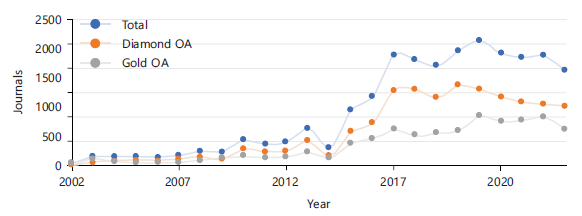
Fig. 1: Annual distribution of OA journals included in DOAJ

Table 1: Geographical distribution of global OA journals, including Gold OA and Diamond OA journals indexed in DOAJ
Total Diamond OA Gold OA
No. Country Journals (n) Country Journals (n) Country Journals (n)
1 Indonesia 2565 Brazil 1386 UK 1735
2 The UK 2218 Indonesia 1266 Indonesia 989
3 Brazil 1526 Spain 941 Switzerland 695
4 The US 1271 Poland 737 The US 649
5 Iran 1012 The US 622 Iran 424
6 Spain 995 Iran 588 Netherlands 371
7 Poland 957 Russia 567 China 369
8 Switzerland 790 Türkiye 559 Egypt 261
9 Russia 640 UK 483 Poland 220
10 Türkiye 594 Italy 471 Germany 157
11 Italy 538 Colombia 437 Brazil 140
12 China 501 Argentina 391 India 133
13 Netherlands 493 France 320 Iraq 128
14 Ukraine 447 Romania 298 South Africa 123
15 Colombia 441 Germany 274 Argentina 110
16 Germany 431 India 258 Korea, Republic of 89
17 Argentina 401 Ukraine 243 Russia 73
18 India 391 Mexico 215 Pakistan 70
19 France 360 Serbia 186 Italy 68
20 Romania 348 Chile 185 Australia 68

Global geographic distribution of DOAJ-indexed journals: Among the countries with OA journals indexed in DOAJ, Indonesia publishes the most (2565) OA journals, followed by the UK (2218) and Brazil (1526); The country published the most Diamond OA journals is Brazil (1386), followed by Indonesia (1266) and Spain (941); The UK (1735), Indonesia (989), and Switzerland (695) have the highest number of Gold OA journals. OA journals mainly focus on Asia, Europe, and the Americas. However, this data also reflects that the number of OA journals included in DOAJ is still limited, and many hybrid journals have not been indexed in DOAJ (Table 1).

Among the 20 countries, 5 Asian countries (Indonesia, Iran, Türkiye, China, India) contribute 4053 OA journals (50.0 %); 11 European countries (UK, Spain, Poland, Switzerland, Russia, Italy, Netherlands, Ukraine, Germany, France, Romania) supply 8579 (42.1 %). In the Americas, 1 North American country (the US 1271) contributes 1271 journals (7.8 %), while 3 South American countries (Brazil 1526, Colombia 441, Argentina 401) add 2368 (14.6 %).

As far as the country-level differences to global OA policies, research results funded by the US federal government must be made openly accessible. While the UK has enacted nationwide mandates that every peer-reviewed article resulting from federal or UKRI funding must be OA immediately upon publication, via either the gold or green route, and without any embargo. Brazil actively promotes Diamond OA
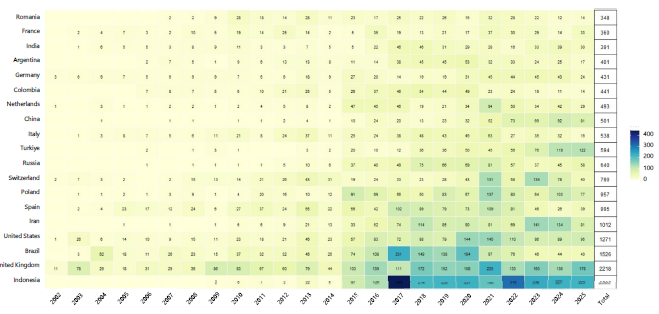
Fig. 2: Heatmap of the inclusion status of the top 20 countries included in DOAJ

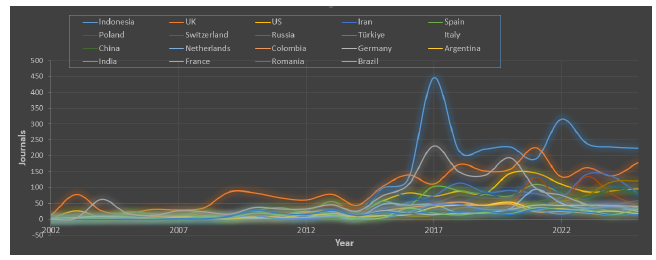
Fig. 3: Growth curve of the top 20 indexed countries from January, 2007 to
September, 2025

The "Publishers Report on the Development of Open Access Publishing in China (2022)9", jointly compiled by the China Association for Science and Technology and the International Association of Science, Technology and Medical Publishers (STM), is an important measure for China to promote open science practice. Besides, Plan S was launched by cOAlition S on 4 September, 2018; over the past seventeen years, it has evolved from demanding immediate, CC-BY open access for all funded research to promoting Diamond OA, while UNESCO’s 2021 Recommendation on Open Science entrenched the same zero-embargo, open-licenses principles worldwide and called on member states to embed them in national policy and infrastructure.

In addition, the geographical distribution of global OA journals, Gold OA, and Diamond OA journals indexed in DOAJ is imbalanced. The heatmap of the inclusion status of the top 20 countries included in DOAJ can be found in Fig. 2, and the growth curve in Fig. 3.

Table 2: Main feature analysis of global Gold OA and Diamond OA journals indexed in DOAJ
Group Gold OA
(n = 8134)
Percentage Diamond OA
(n = 13902)
Percentage Total
(n = 22036)
Pearson χ2 p-value
Language 306.84 0
English 7271 40 10917 60 18188
Non-English 863 22.4 2985 77.6 3848
Subject 2243.37 0
Medicine 2679 55.9 2115 44.1 4794
Technology 3545 49.8 3046 46.2 6591
Social science 1910 53.8 8741 82.1 10651
CC license 1089.45 0
CC BY 5589 49.4 5722 50.6 11311
CC BY-NC 2074 42.6 2792 57.4 4866
CC BY-NC-ND 2149 44.1 2723 55.9 4872
CC BY-NC-SA 427 21.1 1599 78.9 2026
CC BY-ND 139 34.7 262 65.3 401
CC BY-SA 722 39.5 1106 60.5 1828
Publisher's own license 33 17 161 83 194
Public domain & CC0 92 92 18 18 100
Peer review types 1911.47 0
Double anonymous 2730 19.8 10151 73.8 13760
peer review
Others# 4024 48.6 3751 45.3 8276
#: Other peer review methods include fully open peer commentary and open peer review. In addition, a small amount of post-publication peer review and editorial board review is also included

Comparison of characteristics between Gold OA journals and Diamond OA journals recorded in DOAJ: This study analyzed the relationship between different characteristics of Gold OA vs Diamond OA in DOAJ.

Languages: There is a highly significant association between journal language and OA model (p<0.0001). English-language journals show a preference for Diamond OA (60.0%), while non-English journals strongly favor Diamond OA (77.6%).

Subjects: Comparison shows the strongest correlation with the OA model (p<0.0001). Social science journals overwhelmingly prefer Diamond OA (82.1%), while the result shows a more balanced in medicine (44.1% Diamond OA), either dose in technological journals (Gold OA 49.8% vs 46.2% Diamond OA). Social science includes sub-subjects, e.g., Auxiliary Sciences of History, Bibliography. Library Science. Information Resources, Education, Fine Arts, Geography. Anthropology. Recreation, History, Philosophy, Psychology, Religion, Political Science, Music, Language and Literature, Law.

CC license: The journals chose the CC BY account for the highest proportion (p<0.0001). More restrictive licenses (CC BY-NC, CC BY-NC-ND, CC BY-NC-SA) are more common in Diamond OA journals.

Peer review types: Double anonymous peer review is strongly correlated with the Diamond OA model (p<0.0001), with 73.8% of Diamond OA journals using this method compared to only 19.8% of Gold OA journals.

All factors mentioned above show statistically significant associations with the choice between Gold and Diamond OA models. This suggests that journal characteristics, including language, subject, licensing preferences, and peer review types, are important predictors of which OA model a journal adopts. The APC is an important factor of the author's choice, and CC BY, language, and subjects are equally important. The main feature analysis of global Gold OA and Diamond OA journals indexed in DOAJ is presented in Table 2.

Table 3: Composition of basal diet fed to Uda rams
China Total Diamond Indonesia Total Diamond The UK Total Diamond Brazil Total Diamond The US Total Diamond
KeAi.
Communications
147 33 Universitas
Negeri
93 35 Wiley 308 2 University of
São Paulo
47 44 Elsevier 1891 1
Co. Ltd
Tsinghua
23 17 Semarang
Universitas
54 35 BMC 298 14 State University
33 33 Wiley 98 1
University press
Science Press
18 1 Airlangga
Universitas
35 14 Taylor and 231 15 Federal University
of santa catarina
30 29 SAGE
publishing
60 1
Maximum
academic press
17 0 Gadjah Mada
Universitas
Udayana
33 18 francis group
Elsevier
209 0 National council for
Research and graduate
Studies in law
29 29 eScholarship
publishing
30 24
Open exploration
Publishing Inc.
11 4 University of
Brawijaya
33 12 SAGE
publishing
133 29 Federal University of minas gerais 25 23 IEEE 29 1

S2O journals indexed by DOAJ: By the end of September 30, 2025, there were 73 S2O journals indexed in DOAJ, of which 29 were German journals, 23 were US journals, and 21 journals were from the UK.

Comparison of OA journals in 5 countries indexed by DOAJ
Publishers: In terms of publishers, in the US and the UK, the journals are mainly owned by international large commercial publishing groups, such as Wiley, Elsevier, SAGE Publishing, and the vast majority of which are Gold OA journals. This is because gaining profit is the crucial purpose of the international publishing companies, while Diamond OA journals are always newly established in the US and the UK. As soon as the constantly sufficient manuscripts are submitted or included in international databases, such as SCIE, ESCI, or SSCI, especially with a high journal impact factor (JIF), the Diamond OA journals would transform into Gold OA journals. On the contrary, the top 5 publishers in Brazil and Indonesia are all operated by universities, instead of a publishing company. Moreover, Brazil has a higher proportion of Diamond OA journals. The top five publishers that operate OA journals in China are all publishing companies, in which KeAi Communications Co. Ltd., co-founded by Science Press and Elsevier, ranks first, followed are Tsinghua University Press and Science Press.

Due to the fact that international publishers such as Wiley and Elsevier have also established a large number of hybrid journals, the OA journals included in DOAJ also have a bias in terms of international publishers. The top 5 publishers owned OA journals indexed in DOAJ of China, Indonesia, Brazil, the UK, and the US are shown in Table 3.

Table 4: Characteristics analysis of OA journals in China, Indonesia, Brazil, the UK, and the US
Countries
Item Indonesia The UK Brazil The US China Pearson χ2 p-value
Total 2565 2218 1526 1271 501
Language 2037.3 <0.001
English 1934 2213 907 1268 315
Others 631 5 619 3 186
OA type 2423.7
Gold 989 1735 140 649 369
Diamond 1266 483 1386 622 132
Subject 669.1 <0.001
Medicine 237 976 204 462 123
Technology 613 857 284 401 356
Social science 1715 385 1038 408 22
CC license 2155.2* <0.001
CC BY 747 2071 838 881 227
CC BY-NC 279 867 322 324 31
CC BY-NC-ND 38 743 192 550 259
CC BY-NC-SA 321 81 142 50 0
CC BY-SA 1167 37 17 23 0
CC BY- ND 15 92 8 44 2
CC0 0 81 0 14 0
Publisher's own license 0 11 15 40 2
Peer review types 2.02 0.998
Double anonymous peer review 1724 642 974 527 246
Anonymous 549 1390 296 626 235
Others# 293 186 256 118 20
#: Other peer review methods include fully open peer commentary and open peer review. In addition, a small amount of post-publication peer review and editorial board review are also included. *: By Using Fisher's exact probability method

Table 5: Characteristics analysis of OA journals in China compared with Indonesia, Brazil, the UK, and the US by the Bonferroni test
Comparison item χ2 value Raw p-value Bonferroni p-value
Language overall 2037.3 <0.001 NA
China vs. Indonesia 45.9 <0.001 <0.001
China vs. the UK 1794.6 <0.001 <0.001
China vs. Brazil 343.5 <0.001 <0.001
China vs. the US 1808.9 <0.001 <0.001
OA type overall 2423.7 <0.001 NA
China vs. Indonesia 802.4 <0.001 <0.001
China vs. the UK 105.9 <0.001 <0.001
China vs. Brazil 1143.2 <0.001 <0.001
China vs. the US 312.2 <0.001 <0.001
Subject overall 669.1 <0.001 NA
China vs. Indonesia 217.6 <0.001 <0.001
China vs. the UK 279.9 <0.001 <0.001
China vs. Brazil 343.5 <0.001 <0.001
China vs. the US 312.2 <0.001 <0.001
CC license overall 2155.2 <0.001 NA
All pairwise >100 <0.001 <0.001
Peer-review overall 2.02 0.998 NA
All pairwise NA >0.99 >0.99
NA: Not available

Characteristics analysis of OA journals in China, Indonesia, Brazil, the UK, and the US: The results of Table 4 and Table 5 show highly significant differences between the five countries in language distribution (Pearson χ2 test), OA type (Pearson χ2 tests), subjects, and CC license (Fisher’s exact probability method) (all p<0.001). Pairwise comparisons revealed that China differed from each of the other four countries in these four dimensions, with Bonferroni-adjusted p values<0.001. In contrast, no significant heterogeneity was detected in peer-review methods (χ2 = 2.02, p = 0.998).

Regardless of which single country is compared against the pooled data of the other four countries, the differences in language, OA type, subjects, and CC license all reach extremely high significance (p<0.001).

The peer-review method remains non-significant across all comparisons.

Visualization analysis: The Alluvial diagram showed the correlations of the OA types with the CC license of the 5 countries in Fig. 4a-e. During which the UK and the US bear the characteristics of a larger proportion of Gold OA journals, and CC BY as well (Fig. 4b-d). It’s obviously shown that the UK has the largest proportion of Gold OA journals. But in Indonesia, the total volume of Gold OA and Diamond OA journals is almost the same, CC BY-SA is preferred over CC BY (Fig. 4a). Interestingly, the most likely use of the CC license is CC BY-NC-ND in China (Fig. 4e). Besides, Brazil has the highest proportion of Diamond OA journals (Fig. 4c), and CC BY is the most chosen license.

Suggestions and inspirations for the development of scholarly OA journals
Characteristics and prospects of OA journals: OA journals' distributions around the globe are obviously imbalanced. In the top 20 countries, 5 are Asian countries, contributing 50.0% of the total number, 11 European countries account for 42.1%, and 4 American nations (Brazil, the US, Colombia, Argentina) account for 7.8 %. The Gold OA and Diamond OA are quite different from the total. Besides, the results of the comparison of the top 5 countries with the largest number of OA journals show significant differences.

The "Publishers Report on the Development of Open Access Publishing in China (2022)"11 showed that there were a total of 1810 OA scientific and technological journals in China, accounting for 36.47% of the total number of scientific and technological journals in China. Among them, Bronze OA journals have the most, with 1459 types (29.40%); The number of Gold OA journals and Diamond OA journals is 227 (4.57%) and 23 (0.46%), respectively.
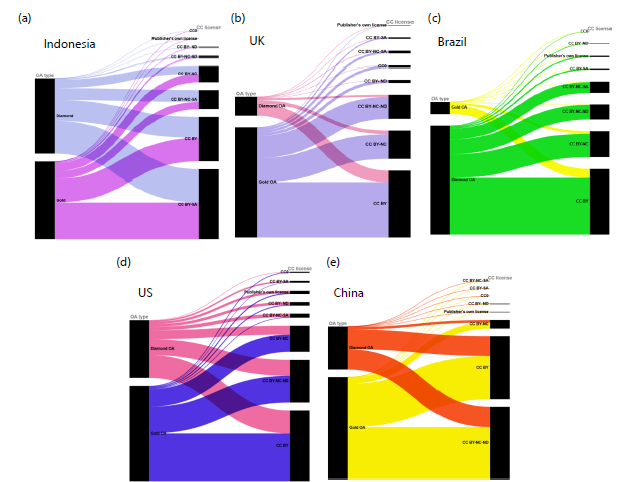
Fig. 4(a-e): Alluvial diagrams show the correlation of the OA types and CC
license of the 5 countries, (a) Indonesia, (b) The UK, (c)
Brazil, (d) The US and (e) China

The results of this study show that as of September 2025, there are 501 journals (Gold OA vs Diamond OA: 369 vs 132) indexed by DOAJ in China. The total number of DOAJ-indexed journals in China is less than the UK, the US, Brazil, and Indonesia. According to the solutions released by "Blue Book on the Development of China Science and Technology Journals (2024)"10, China’s scholarly journals, especially Chinese scientific and technological journals, have launched their own solutions, forming the self-operated journal websites, practicing free access to full-text articles, and relying on external platform dissemination channels to provide full-text articles, opening up a parallel publishing model of OA and subscription for the same journal. For Bronze journals, the copyright licenses are always unclear, and the description of the rights for readers to use is ambiguous. For example, a Bronze OA journal with no CC license but provides free download services does not represent that the journal discloses the scope of copyright using scope, including the derivatives in any form like adaptation, translation, annotation, etc. Therefore, it could be deduced that the development of OA in Chinese journals has its own characteristics, but the license to use the article and information transparency by DOAJ are worth learning from. Besides, no matter the Gold OA or Diamond OA model, either one is better the Bronze OA.

Types, applications, and suggestions of the CC license: The CC license includes, namely, attribution (BY), non-commercial use (NC), no derivatives (ND), and share alike (SA). At present, the CC license has been updated to version 4.0, which includes 7 CC license: As CC BY, CC BY-NC, CC BY-NC-ND, CC BY-NC-SA, CC-BY-ND, CC BY-SA, and CC0. CC BY-NC-ND is also the strictest license type. The CC licenses most commonly used by China’s journals included in DOAJ are CC BY-NC-ND, accounting for 51.7% (259/501), which is lower than the data released before11. The CC BY-NC-ND is the strictest CC license; derivatives and commercial use are prohibited. Journals restrict commercial use and prohibit authors or third parties from interpreting works before publication (adaptation, translation, annotation, editing). The second most commonly used are CC BY and CC BY-NC, accounting for 17.72 and 8.54%, respectively. Normal re-use is allowed in each CC license; only the commercial use is prohibited in CC BY-NC and CC BY-NC-ND.

Table 6: The characteristics analysis of CC license and languages of OA journals in Indonesia
CC license Diamond Gold English Indonesian Arabic
CC BY 354 393 522 521 29
CC BY-NC 140 139 216 186 14
CC BY-NC-ND 18 20 32 22 1
CC BY-NC-SA 198 123 229 243 13
CC BY-SA 553 614 896 839 70
CC BY- ND 6 9 32 22 1
CC0 0 0 0 0 0
Publisher’s own license 0 0 0 0 0

Academic journals strictly prohibit submitting multiple manuscripts, and many journals do not accept derivative works. In recent years, China’s scholarly journals have gradually been included in international databases, either in full-text or abstract form. Therefore, journals that publish derivative works (especially translated works) may be included in the same database as journals that publish the original text, resulting in duplicate publications, and malpractice might occur. Therefore, it is recommended that China’s OA journals either adopt the CC BY-NC-ND license to prohibit authors from derivative works or adopt CC BY to fully open the original work.

Besides, journals with preprints usually publish their papers online promptly before their official publication, expanding the dissemination of the papers and the influence of the journal. For such OA journals, it is recommended to use CC BY-SA or CC BY-NC-SA licenses.

In addition, for journals in Indonesia, many journals have bilingual publishing in English and Indonesian. In addition, Arabic language journals also account for a certain proportion of OA journals in Indonesia (Table 6).

For Brazil, the proportion of Portuguese language journals and bilingual journals in Portuguese and English is relatively high, so for journals that use CC BY-NC-ND and CC BY-ND, it is important to note the prohibition of derivation.

Superiority of a journal applies to DOAJ: The former researchers demonstrated that the OA model is beneficial for the dissemination of academic achievements, improving the transparency of the journals, enhancing their visibility, and international influence11-15. It is helpful for a journal to establish OA strategies by referring to the inclusion standards of DOAJ: (1) It conforms to the development requirements of open science, promotes the rapid dissemination of knowledge, thereby enhancing the influence of the journal. (2) The DOAJ is the world’s largest OA database, with a large number of journals and users. It might gain more exposure and enhance the visibility of authors, journals. (3) The process of applying for DOAJ can help the journal improve the creation of the policies (including but not limited to OA statements, OA systems for journals, peer review policy, editorial policy, ethical statement, academic misconduct statements, etc.) and build an international journal’s website to achieve transparency in journal information14. (4) The adoption and implementation of a CC license by a journal can clarify its copyright regulations and clearly display the scope of users' rights and obligations.

The DOAJ helps OA journals standardize their policies and clarify the scope of OA. Even if journals do not apply to DOAJ, they can still benefit from DOAJ.

Develop OA strategies that are in line with the characteristics of the journal itself: The types of OA include Gold OA, Diamond OA, Green OA, Bronze OA, and Hybrid. Different types of OA journals have varying degrees of openness in publishing papers, agreements on copyright usage, and Article Processing Charges (APCs). Among them, Golden OA and Diamond OA journals have clear provisions on author copyright retention, transfer, and third-party licensing. The main difference between Golden OA and Diamond OA is whether the journal charges APC. Bronze OA does not declare the CC license. Hybrid journals allow authors to choose whether the publication type is a subscription model or an OA model13. Whether journals adopt OA model and which OA type to adopt should be in accordance with the characteristics of the journal itself, such as Gold OA, Diamond OA, etc5. The DOAJ only includes journals with complete OA (including Gold OA and Diamond OA journals), and does not include hybrid or delayed OA13. At present, Bronze OA has the highest proportion in China’s OA journals, while Gold OA, Diamond OA, and hybrid journals have a relatively small proportion; In contrast, Brazil has the highest proportion of Diamond OA journals, while the UK and the US have the highest proportion of Gold OA journals. Although Bronze OA Journal allows readers to download papers for free, the journal does not have clear license to use. With the development of journal publishing, the number of Bronze OA journals will gradually decrease, for which, it is recommended to clarify the relevant details of license to use, in order to standardize the scope of rights to use for anyone else. Gold OA and Diamond OA are two important types of DOAJ. The difference between Gold OA Journal and Diamond OA Journal is whether they charge APC. The APC generally includes various expenses such as online manuscript processing systems or fees for peer review, language polishing, chart production, editing, typesetting, proofreading, preprint publishing, etc.14, post publication services, long-term archiving, and others. In China, journals (especially Chinese language journals) usually refer to APC as publication fee, which can also include the fees mentioned above. At present, newly established English journals and journals with strong support from their organizers do not require APC. Most of these journals are jointly published by domestic organizers and international publishing institutions. The Diamond OA model helps journals attract sources of articles, thereby enhancing the journal's influence. Anyway, the collection of APC by Gold OA journals should be within a reasonable range. When the fees are too high, it may deter authors and potentially lead to the development of predatory journals15.

Transparency and policy-making: Journals should comply with their own CC licenses, clarifying the scope of rights and obligations of publishers, authors, and users. At the same time, the author’s copyright retention should be clearly defined, such as the right of attribution, the right to protect the integrity of the work, etc. The transfer of the copyright of the compiled work and the right of information network dissemination should be clearly stated in the copyright transfer agreement. The Bronze journal with the highest proportion of OA in China is characterized by unclear copyright licensing agreements and a lack of a CC license. Therefore, implementing CC license that complies with their own standards or clarifying OA statements is of great benefit to OA journals.

Strictly implementing the peer review policy is one of the most important means to achieve open science. OA is an important component of open science. Open science includes open data, open peer review, and open academic achievements. Strictly implementing the peer review policy in OA journals can help improve their academic quality and promote the development of open science. In addition, a strict and transparent peer review policy is an important symbol of OA journals16.

The DOAJ first introduced the Principles of Transparency and Best Practice in Scholarly Publications in December 2013, aimed at helping DOAJ identify the quality of academic journals. The journal website should display basic information about the journal, such as the journal introduction, aim and scope, sponsor, publisher, editorial board, CC license, copyright information, peer review policy17, APC and other fee information (including exemption policies, etc.)5.

Transition of business models: The number of journals included in DOAJ is constantly changing, and some journals have transitioned from traditional subscription models to OA. Although the OA model is of great significance in enhancing the influence of journals, journals should also achieve sustainable development in terms of operations. The change in subscription mode will affect the incomes of journals,

but due to the short half-life of scientific journals, achieving rapid display for the research results is an important task for scientific journals. The proportion of subscription revenue to the total revenue of academic journals is usually not large. For the vast majority of Gold OA journals, APC is the main source of the journal’s profit point. On the contrary, the Diamond OA model can be used to attract authors to submit articles. After the journals have been indexed in databases such as ESCI, SCIE or SSCI18, or already have a continuous and stable source of high-quality manuscripts, the publishing model can be transformed into Gold OA to help the journal gain profits. In addition, Bronze OA journals can also be converted to Gold OA and Diamond OA journals by clarifying copyright agreements. The inclusion requirements of DOAJ for Gold OA and Diamond OA journals are worth learning from.

Besides, starting from Spring 2025, a new label was added in DOAJ, known as “Subscribe to Open” (S2O), which is a pragmatic approach for converting subscription journals to open access, free and immediate online availability of research, without reliance on either APC. By the end of September 30, 2025, there were 73 S2O journals indexed in DOAJ, of which 29 were German journals, 23 were from the US, and 21 were from the UK. We could look forward to more S2O journals being added in DOAJ.

CONCLUSION

At present, the number of journals included in DOAJ continues to rise, especially in many countries where the number of journals included still needs to be increased. The inclusion criteria of DOAJ are known as the Gold standard for OA journals, but currently, DOAJ only includes Gold OA and Diamond OA journals, even S2O, and does not include journals with hybrid publications. By drawing on the inclusion evaluation system of DOAJ, it is helpful for the OA construction and development of journals. Adopting and implementing the CC license helps OA journals standardize the scope of rights to use for anyone. The OA model is beneficial for the dissemination of academic achievements and also enhances the visibility of journals; In addition, OA is an important component of open science, and OA journals should adopt specific OA models based on their own characteristics to adapt to the development of open science. This study analyzed the development status and characteristics of DOAJ indexed journals around the globe, including subjects, languages, CC licenses, peer review types, publishers, etc., and the differences of the OA journals published in Indonesia, the UK, Brazil, the US and China indexed in DOAJ were compared as well. Further study will focus on the APC distribution of Gold OA journals around the globe and S2O label. In short, OA infrastructure CC licenses, DOAJ, repositories and other means facilitate the development of OA. DOAJ as one of the largest OA databases, provides quality filters, persistent metadata, and visibility, both for publishers, authors and for users.

SIGNIFICANCE STATEMENT

This study provides a comprehensive global analysis of Gold and Diamond OA journals indexed in DOAJ, offering empirical evidence on their distribution by subject, language, licensing type, peer-review model, and publisher characteristics. By comparing OA practices in Indonesia, the UK, Brazil, the US, and China, the study reveals national differences in OA development and strategic models. The findings highlight the importance of CC licensing, DOAJ indexing, and OA infrastructure in improving journal visibility, ensuring equitable access, and supporting open science practices worldwide.

FUNDING

Professor Linhui Wang received the grants by the Shanghai Jiao Tong University (SJTU)-De Gruyter Joint Lab Fund project titled “Research on the Practice of Open Access Publishing in Biomedical Journals "(Grant No. SJTU-DG-2024-001). Other authors received no grants from commercial, governmental, or non-profit organizations related to this work.

REFERENCES

  1. Gennaro, S., J. Seward and D. Sullivan, 2023. The future of open access, open science, and research dissemination. J. Nurs. Scholarship, 55: 1085-1086.
  2. Suber, P., 2012. Open Access. The MIT Press, Cambridge, Massachusetts, USA, ISBN: 978-0-262-51763-8, Pages: 242.
  3. Tennant, J.P., F. Waldner, D.C. Jacques, P. Masuzzo, L.B. Collister and C.H.J. Hartgerink, 2016. The academic, economic and societal impacts of Open Access: An evidence-based review. F1000Research, 5.
  4. Pulverer, B., 2023. Open access for open science. EMBO Rep., 24.
  5. Druelinger, D. and L. Ma, 2023. Missing a golden opportunity? An analysis of publication trends by income level in the Directory of Open Access Journals 1987-2020. Learned Publ., 36: 348-358.
  6. Tennant, J.P., H. Crane, T. Crick, J. Davila and A. Enkhbayar et al., 2019. Ten hot topics around scholarly publishing. Publications, 7.
  7. Asai, S., 2024. Choice of Open Access in Elsevier hybrid journals. Publ. Res. Q., 40: 1-10.
  8. Marchitelli, A., P. Galimberti, A. Bollini and D. Mitchell, 2017. Improvement of editorial quality of journals indexed in DOAJ: A data analysis. JLIS.it, 8: 1-21.
  9. Piwowar, H., J. Priem and R. Orr, 2019. The future of OA: A large-scale analysis projecting Open Access publication and readership. bioRxiv.
  10. Zhang, X., 2014. Development of open access in China: Strategies, practices, challenges. Insights: UKSG J., 27: 45-50.
  11. Wang, L. and M. Ni, 2024. Development status and countermeasures of China's Gold OA and Diamond OA journals: A study of the data from DOAJ [In Chinese]. Chin. J. Sci. Tech. Periodicals, 35: 329-338.
  12. Wang, L., M. Ni and X. Li, 2025. The development status and countermeasures of biomedical OA journals in China: A study based on statistical analysis of the journal indexed data in PubMed Central and DOAJ. J. Scholarly Commun., 1.
  13. Liu, J., 2025. Open access publishing in Singapore: Trends and policy perspectives. J. Scholarly Commun., 1.
  14. Wang, Y., 2024. Updates of "Principles of Transparency and Best Practice in Scholarly Publishing" and implications for Chinese academic journals. Chin. J. Sci. Tech. Periodicals, 35: 1109-1115.
  15. Ding, Z.Q. and C.W. Li, 2022. OA publishing situation and outlook in China from analysis of the selected journals of Excellence Action Plan for China STM Journals. Chin. J. Sci. Tech. Periodicals, 33: 1561-1568.
  16. Shen, C. and B.C. Björk, 2015. 'Predatory' open access: A longitudinal study of article volumes and market characteristics. BMC Med., 13.
  17. Sayab, M., 2023. How reliable are anonymous lists in identifying predatory journals and publishers? Trends Scholarly Publ., 2: 31-33.
  18. Aksnes, D.W. and G. Sivertsen, 2019. A criteria-based assessment of the coverage of Scopus and Web of Science. J. Data Inf. Sci., 4: 1-21.

INTRODUCTION

Open access (OA), as a component of open science, promotes scientific exchange and improves the efficiency of scientific research1. In 2001, the Budapest Open Access Initiative (BOAI) explicitly proposed the concept of OA with the aim of promoting scientific development and enhancing the public utilization of scientific research2. In addition, OA has also changed the business model of journals, with the payment end shifting from readers to authors. The development of science and technology has brought opportunities and challenges to the development and quality improvement of scientific journals. UNESCO actively advocates OA and open science to make technological development more efficient3,4.

The Directory of Open Access Journals (DOAJ)5 was established by Lund University of Sweden in May 2003, which indexes fully peer-reviewed OA journals, in order to enhance the visibility, reputation, and impact on disciplinary development of high-quality, peer-reviewed, and open academic journals worldwide. DOAJ is not limited by disciplines, regions, or languages. In addition to medical and technological journals, DOAJ indexes various fields of natural and social sciences as well. DOAJ truly reflects the development status of global OA journals. The indexing criteria of DOAJ have become the unofficial gold standard for evaluating OA journals.

The types of OA include Gold OA, Diamond OA, Green OA, Bronze OA, and hybrid5. The main difference between Gold OA and Diamond OA is whether the journal charges Article Processing Charges (APC). At present, DOAJ only includes fully OA (Gold OA and Diamond OA) journals; journals of hybrid, delayed OA, Bronze OA, and subscription modes with OA options are out of the scope of DOAJ6. In addition, DOAJ has clear requirements for the Creative Commons (CC)7 licenses and the peer review strategy adopted by journals.

This study analyzed the development status and characteristics of DOAJ-indexed journals around the globe. The analysis included subjects, languages, CC licenses, peer review types, publishers, etc., and the differences of the OA journals published in Indonesia, the UK, Brazil, the US, and China indexed in DOAJ were compared as well.

Retrospective study methods and data sources
Comparative analysis of DOAJ inclusion: This is a retrospective study, and the data were pulled on 15 Sep, 2025. This study analyzed the OA publishing status of the globe and the top 5 countries (Indonesia, the UK, Brazil, the US, and China) indexed in DOAJ. Analysis parameters included language, subject category, license type, peer review types, etc. We analyzed the differences between groups through statistical methods.

According to whether APC is charged, journals were divided into two categories: Gold OA Journal and Diamond OA Journal. Then, subgroup grouping is performed based on various parameters. Subgroup grouping criteria:

  Language
  Disciplinary classification
  CC license
  Top five publishers
  Types of peer review

Among the journals indexed in DOAJ, many have multiple CC license options, and there are also multiple bilingual journals. Therefore, the total number of journals of different CC license types is not statistically significant.

Retrieval: The DOAJ retrieval methods include classification retrieval and keyword retrieval. The DOAJ has different types of settings, and DOAJ retrieval does not require users to input the retrieval language. Researchers only need to select the desired classification based on the settings. This study used the classification settings of DOAJ to retrieve the data.

In terms of classification search, DOAJ provides search parameter options such as subject classifications, languages, CC license types, publishers, publishing locations, peer review types, date added, and whether APC is charged.

Retrieval strategy for this study is as follows:

  The global OA publishing situation is based on the total data collected by DOAJ. For example, the publication location options for journals in China are: China, including the Taiwan Province of China and Hong Kong Special Administrative Region (SAR), and Macao SAR
  Language chosen English AND/OR others
  Classify journals into Scientific, Technical, and Medical (STM) journals and humanities and social science journals based on disciplinary types
  Other parameters such as date added, OA types, publishers, etc. Besides
  Medicine: Select the Medicine option
  Science and technology: Science OR Agriculture OR Technology OR Military Science OR Naval Science OR Technology
  Social science and other subjects: General works OR History OR Geography, anthropology, recreation OR Social science OR Fine arts OR Music OR Language and literature OR Law OR Bibliography, library science. Information resources

Statistical analysis: SPSS 20.0 statistical software was used to compare and analyze the data under various classification items of Gold OA and Diamond OA. The comparison of count data is conducted using Pearson’s Chi-square test or Fisher’s exact probability method. Dunn-Bonferroni analysis was used to analyze the differences in OA characteristics between Brazil, Indonesia, the UK, the US, and China. p<0.05 indicates a statistically significant difference.

Data visualized by R and Kimi and Excel, during which the online AIGC software Kimi moonshot (https://www.kimi.com/) was used to generate the program code for creating heat maps, then the code was tested by R, and the heat map was created. Alluvial diagram was created by RAWGraphs 2.0 (https://app.rawgraphs.io/)8.

RESULTS AND DISCUSSION

Global journal inclusion in DOAJ
Growth trend: By September 30, 2025, DOAJ indexed 22036 OA journals, of which 13902 do not charge APC (Diamond OA), accounting for 63.1%, and 8134 are Gold OA journals, accounting for 36.9%. From the establishment of DOAJ in 2002 to 2014, the total journals indexed by DOAJ were relatively low, and there was a sharp down in 2014. Since 2010, the total Diamond OA journals has surpassed the Gold OA journals. Then, since 2015, DOAJ has shown an upward trend in the inclusion of global OA journals, with over 1000 new journals added each year. Although each year in the recent 10 years, the annual growth volume was still larger than 1000 journals, the growth rate has been gradually down, especially since 2021. Meanwhile, DOAJ curated a global whitelist of immediate, CC-licensed OA journals, offered free APC-filtered search, awarded a Seal for best practice, tied inclusion to research-funding mandates, and shares reusable metadata to speed open-science adoption worldwide, etc. All these policies promoted the indexed volume of DOAJ. More details of the annual distribution and growth trend of OA journals included in DOAJ are shown in Fig. 1.

Fig. 1: Annual distribution of OA journals included in DOAJ

Table 1: Geographical distribution of global OA journals, including Gold OA and Diamond OA journals indexed in DOAJ
Total Diamond OA Gold OA
No. Country Journals (n) Country Journals (n) Country Journals (n)
1 Indonesia 2565 Brazil 1386 UK 1735
2 The UK 2218 Indonesia 1266 Indonesia 989
3 Brazil 1526 Spain 941 Switzerland 695
4 The US 1271 Poland 737 The US 649
5 Iran 1012 The US 622 Iran 424
6 Spain 995 Iran 588 Netherlands 371
7 Poland 957 Russia 567 China 369
8 Switzerland 790 Türkiye 559 Egypt 261
9 Russia 640 UK 483 Poland 220
10 Türkiye 594 Italy 471 Germany 157
11 Italy 538 Colombia 437 Brazil 140
12 China 501 Argentina 391 India 133
13 Netherlands 493 France 320 Iraq 128
14 Ukraine 447 Romania 298 South Africa 123
15 Colombia 441 Germany 274 Argentina 110
16 Germany 431 India 258 Korea, Republic of 89
17 Argentina 401 Ukraine 243 Russia 73
18 India 391 Mexico 215 Pakistan 70
19 France 360 Serbia 186 Italy 68
20 Romania 348 Chile 185 Australia 68

Global geographic distribution of DOAJ-indexed journals: Among the countries with OA journals indexed in DOAJ, Indonesia publishes the most (2565) OA journals, followed by the UK (2218) and Brazil (1526); The country published the most Diamond OA journals is Brazil (1386), followed by Indonesia (1266) and Spain (941); The UK (1735), Indonesia (989), and Switzerland (695) have the highest number of Gold OA journals. OA journals mainly focus on Asia, Europe, and the Americas. However, this data also reflects that the number of OA journals included in DOAJ is still limited, and many hybrid journals have not been indexed in DOAJ (Table 1).

Among the 20 countries, 5 Asian countries (Indonesia, Iran, Türkiye, China, India) contribute 4053 OA journals (50.0 %); 11 European countries (UK, Spain, Poland, Switzerland, Russia, Italy, Netherlands, Ukraine, Germany, France, Romania) supply 8579 (42.1 %). In the Americas, 1 North American country (the US 1271) contributes 1271 journals (7.8 %), while 3 South American countries (Brazil 1526, Colombia 441, Argentina 401) add 2368 (14.6 %).

As far as the country-level differences to global OA policies, research results funded by the US federal government must be made openly accessible. While the UK has enacted nationwide mandates that every peer-reviewed article resulting from federal or UKRI funding must be OA immediately upon publication, via either the gold or green route, and without any embargo. Brazil actively promotes Diamond OA

Fig. 2: Heatmap of the inclusion status of the top 20 countries included in DOAJ

Fig. 3: Growth curve of the top 20 indexed countries from January, 2007 to
September, 2025

The "Publishers Report on the Development of Open Access Publishing in China (2022)9", jointly compiled by the China Association for Science and Technology and the International Association of Science, Technology and Medical Publishers (STM), is an important measure for China to promote open science practice. Besides, Plan S was launched by cOAlition S on 4 September, 2018; over the past seventeen years, it has evolved from demanding immediate, CC-BY open access for all funded research to promoting Diamond OA, while UNESCO’s 2021 Recommendation on Open Science entrenched the same zero-embargo, open-licenses principles worldwide and called on member states to embed them in national policy and infrastructure.

In addition, the geographical distribution of global OA journals, Gold OA, and Diamond OA journals indexed in DOAJ is imbalanced. The heatmap of the inclusion status of the top 20 countries included in DOAJ can be found in Fig. 2, and the growth curve in Fig. 3.

Table 2: Main feature analysis of global Gold OA and Diamond OA journals indexed in DOAJ
Group Gold OA
(n = 8134)
Percentage Diamond OA
(n = 13902)
Percentage Total
(n = 22036)
Pearson χ2 p-value
Language 306.84 0
English 7271 40 10917 60 18188
Non-English 863 22.4 2985 77.6 3848
Subject 2243.37 0
Medicine 2679 55.9 2115 44.1 4794
Technology 3545 49.8 3046 46.2 6591
Social science 1910 53.8 8741 82.1 10651
CC license 1089.45 0
CC BY 5589 49.4 5722 50.6 11311
CC BY-NC 2074 42.6 2792 57.4 4866
CC BY-NC-ND 2149 44.1 2723 55.9 4872
CC BY-NC-SA 427 21.1 1599 78.9 2026
CC BY-ND 139 34.7 262 65.3 401
CC BY-SA 722 39.5 1106 60.5 1828
Publisher's own license 33 17 161 83 194
Public domain & CC0 92 92 18 18 100
Peer review types 1911.47 0
Double anonymous 2730 19.8 10151 73.8 13760
peer review
Others# 4024 48.6 3751 45.3 8276
#: Other peer review methods include fully open peer commentary and open peer review. In addition, a small amount of post-publication peer review and editorial board review is also included

Comparison of characteristics between Gold OA journals and Diamond OA journals recorded in DOAJ: This study analyzed the relationship between different characteristics of Gold OA vs Diamond OA in DOAJ.

Languages: There is a highly significant association between journal language and OA model (p<0.0001). English-language journals show a preference for Diamond OA (60.0%), while non-English journals strongly favor Diamond OA (77.6%).

Subjects: Comparison shows the strongest correlation with the OA model (p<0.0001). Social science journals overwhelmingly prefer Diamond OA (82.1%), while the result shows a more balanced in medicine (44.1% Diamond OA), either dose in technological journals (Gold OA 49.8% vs 46.2% Diamond OA). Social science includes sub-subjects, e.g., Auxiliary Sciences of History, Bibliography. Library Science. Information Resources, Education, Fine Arts, Geography. Anthropology. Recreation, History, Philosophy, Psychology, Religion, Political Science, Music, Language and Literature, Law.

CC license: The journals chose the CC BY account for the highest proportion (p<0.0001). More restrictive licenses (CC BY-NC, CC BY-NC-ND, CC BY-NC-SA) are more common in Diamond OA journals.

Peer review types: Double anonymous peer review is strongly correlated with the Diamond OA model (p<0.0001), with 73.8% of Diamond OA journals using this method compared to only 19.8% of Gold OA journals.

All factors mentioned above show statistically significant associations with the choice between Gold and Diamond OA models. This suggests that journal characteristics, including language, subject, licensing preferences, and peer review types, are important predictors of which OA model a journal adopts. The APC is an important factor of the author's choice, and CC BY, language, and subjects are equally important. The main feature analysis of global Gold OA and Diamond OA journals indexed in DOAJ is presented in Table 2.

Table 3: Composition of basal diet fed to Uda rams
China Total Diamond Indonesia Total Diamond The UK Total Diamond Brazil Total Diamond The US Total Diamond
KeAi.
Communications
147 33 Universitas
Negeri
93 35 Wiley 308 2 University of
São Paulo
47 44 Elsevier 1891 1
Co. Ltd
Tsinghua
23 17 Semarang
Universitas
54 35 BMC 298 14 State University
33 33 Wiley 98 1
University press
Science Press
18 1 Airlangga
Universitas
35 14 Taylor and 231 15 Federal University
of santa catarina
30 29 SAGE
publishing
60 1
Maximum
academic press
17 0 Gadjah Mada
Universitas
Udayana
33 18 francis group
Elsevier
209 0 National council for
Research and graduate
Studies in law
29 29 eScholarship
publishing
30 24
Open exploration
Publishing Inc.
11 4 University of
Brawijaya
33 12 SAGE
publishing
133 29 Federal University of minas gerais 25 23 IEEE 29 1

S2O journals indexed by DOAJ: By the end of September 30, 2025, there were 73 S2O journals indexed in DOAJ, of which 29 were German journals, 23 were US journals, and 21 journals were from the UK.

Comparison of OA journals in 5 countries indexed by DOAJ
Publishers: In terms of publishers, in the US and the UK, the journals are mainly owned by international large commercial publishing groups, such as Wiley, Elsevier, SAGE Publishing, and the vast majority of which are Gold OA journals. This is because gaining profit is the crucial purpose of the international publishing companies, while Diamond OA journals are always newly established in the US and the UK. As soon as the constantly sufficient manuscripts are submitted or included in international databases, such as SCIE, ESCI, or SSCI, especially with a high journal impact factor (JIF), the Diamond OA journals would transform into Gold OA journals. On the contrary, the top 5 publishers in Brazil and Indonesia are all operated by universities, instead of a publishing company. Moreover, Brazil has a higher proportion of Diamond OA journals. The top five publishers that operate OA journals in China are all publishing companies, in which KeAi Communications Co. Ltd., co-founded by Science Press and Elsevier, ranks first, followed are Tsinghua University Press and Science Press.

Due to the fact that international publishers such as Wiley and Elsevier have also established a large number of hybrid journals, the OA journals included in DOAJ also have a bias in terms of international publishers. The top 5 publishers owned OA journals indexed in DOAJ of China, Indonesia, Brazil, the UK, and the US are shown in Table 3.

Table 4: Characteristics analysis of OA journals in China, Indonesia, Brazil, the UK, and the US
Countries
Item Indonesia The UK Brazil The US China Pearson χ2 p-value
Total 2565 2218 1526 1271 501
Language 2037.3 <0.001
English 1934 2213 907 1268 315
Others 631 5 619 3 186
OA type 2423.7
Gold 989 1735 140 649 369
Diamond 1266 483 1386 622 132
Subject 669.1 <0.001
Medicine 237 976 204 462 123
Technology 613 857 284 401 356
Social science 1715 385 1038 408 22
CC license 2155.2* <0.001
CC BY 747 2071 838 881 227
CC BY-NC 279 867 322 324 31
CC BY-NC-ND 38 743 192 550 259
CC BY-NC-SA 321 81 142 50 0
CC BY-SA 1167 37 17 23 0
CC BY- ND 15 92 8 44 2
CC0 0 81 0 14 0
Publisher's own license 0 11 15 40 2
Peer review types 2.02 0.998
Double anonymous peer review 1724 642 974 527 246
Anonymous 549 1390 296 626 235
Others# 293 186 256 118 20
#: Other peer review methods include fully open peer commentary and open peer review. In addition, a small amount of post-publication peer review and editorial board review are also included. *: By Using Fisher's exact probability method

Table 5: Characteristics analysis of OA journals in China compared with Indonesia, Brazil, the UK, and the US by the Bonferroni test
Comparison item χ2 value Raw p-value Bonferroni p-value
Language overall 2037.3 <0.001 NA
China vs. Indonesia 45.9 <0.001 <0.001
China vs. the UK 1794.6 <0.001 <0.001
China vs. Brazil 343.5 <0.001 <0.001
China vs. the US 1808.9 <0.001 <0.001
OA type overall 2423.7 <0.001 NA
China vs. Indonesia 802.4 <0.001 <0.001
China vs. the UK 105.9 <0.001 <0.001
China vs. Brazil 1143.2 <0.001 <0.001
China vs. the US 312.2 <0.001 <0.001
Subject overall 669.1 <0.001 NA
China vs. Indonesia 217.6 <0.001 <0.001
China vs. the UK 279.9 <0.001 <0.001
China vs. Brazil 343.5 <0.001 <0.001
China vs. the US 312.2 <0.001 <0.001
CC license overall 2155.2 <0.001 NA
All pairwise >100 <0.001 <0.001
Peer-review overall 2.02 0.998 NA
All pairwise NA >0.99 >0.99
NA: Not available

Characteristics analysis of OA journals in China, Indonesia, Brazil, the UK, and the US: The results of Table 4 and Table 5 show highly significant differences between the five countries in language distribution (Pearson χ2 test), OA type (Pearson χ2 tests), subjects, and CC license (Fisher’s exact probability method) (all p<0.001). Pairwise comparisons revealed that China differed from each of the other four countries in these four dimensions, with Bonferroni-adjusted p values<0.001. In contrast, no significant heterogeneity was detected in peer-review methods (χ2 = 2.02, p = 0.998).

Regardless of which single country is compared against the pooled data of the other four countries, the differences in language, OA type, subjects, and CC license all reach extremely high significance (p<0.001).

The peer-review method remains non-significant across all comparisons.

Visualization analysis: The Alluvial diagram showed the correlations of the OA types with the CC license of the 5 countries in Fig. 4a-e. During which the UK and the US bear the characteristics of a larger proportion of Gold OA journals, and CC BY as well (Fig. 4b-d). It’s obviously shown that the UK has the largest proportion of Gold OA journals. But in Indonesia, the total volume of Gold OA and Diamond OA journals is almost the same, CC BY-SA is preferred over CC BY (Fig. 4a). Interestingly, the most likely use of the CC license is CC BY-NC-ND in China (Fig. 4e). Besides, Brazil has the highest proportion of Diamond OA journals (Fig. 4c), and CC BY is the most chosen license.

Suggestions and inspirations for the development of scholarly OA journals
Characteristics and prospects of OA journals: OA journals' distributions around the globe are obviously imbalanced. In the top 20 countries, 5 are Asian countries, contributing 50.0% of the total number, 11 European countries account for 42.1%, and 4 American nations (Brazil, the US, Colombia, Argentina) account for 7.8 %. The Gold OA and Diamond OA are quite different from the total. Besides, the results of the comparison of the top 5 countries with the largest number of OA journals show significant differences.

The "Publishers Report on the Development of Open Access Publishing in China (2022)"11 showed that there were a total of 1810 OA scientific and technological journals in China, accounting for 36.47% of the total number of scientific and technological journals in China. Among them, Bronze OA journals have the most, with 1459 types (29.40%); The number of Gold OA journals and Diamond OA journals is 227 (4.57%) and 23 (0.46%), respectively.

Fig. 4(a-e): Alluvial diagrams show the correlation of the OA types and CC
license of the 5 countries, (a) Indonesia, (b) The UK, (c)
Brazil, (d) The US and (e) China

The results of this study show that as of September 2025, there are 501 journals (Gold OA vs Diamond OA: 369 vs 132) indexed by DOAJ in China. The total number of DOAJ-indexed journals in China is less than the UK, the US, Brazil, and Indonesia. According to the solutions released by "Blue Book on the Development of China Science and Technology Journals (2024)"10, China’s scholarly journals, especially Chinese scientific and technological journals, have launched their own solutions, forming the self-operated journal websites, practicing free access to full-text articles, and relying on external platform dissemination channels to provide full-text articles, opening up a parallel publishing model of OA and subscription for the same journal. For Bronze journals, the copyright licenses are always unclear, and the description of the rights for readers to use is ambiguous. For example, a Bronze OA journal with no CC license but provides free download services does not represent that the journal discloses the scope of copyright using scope, including the derivatives in any form like adaptation, translation, annotation, etc. Therefore, it could be deduced that the development of OA in Chinese journals has its own characteristics, but the license to use the article and information transparency by DOAJ are worth learning from. Besides, no matter the Gold OA or Diamond OA model, either one is better the Bronze OA.

Types, applications, and suggestions of the CC license: The CC license includes, namely, attribution (BY), non-commercial use (NC), no derivatives (ND), and share alike (SA). At present, the CC license has been updated to version 4.0, which includes 7 CC license: As CC BY, CC BY-NC, CC BY-NC-ND, CC BY-NC-SA, CC-BY-ND, CC BY-SA, and CC0. CC BY-NC-ND is also the strictest license type. The CC licenses most commonly used by China’s journals included in DOAJ are CC BY-NC-ND, accounting for 51.7% (259/501), which is lower than the data released before11. The CC BY-NC-ND is the strictest CC license; derivatives and commercial use are prohibited. Journals restrict commercial use and prohibit authors or third parties from interpreting works before publication (adaptation, translation, annotation, editing). The second most commonly used are CC BY and CC BY-NC, accounting for 17.72 and 8.54%, respectively. Normal re-use is allowed in each CC license; only the commercial use is prohibited in CC BY-NC and CC BY-NC-ND.

Table 6: The characteristics analysis of CC license and languages of OA journals in Indonesia
CC license Diamond Gold English Indonesian Arabic
CC BY 354 393 522 521 29
CC BY-NC 140 139 216 186 14
CC BY-NC-ND 18 20 32 22 1
CC BY-NC-SA 198 123 229 243 13
CC BY-SA 553 614 896 839 70
CC BY- ND 6 9 32 22 1
CC0 0 0 0 0 0
Publisher’s own license 0 0 0 0 0

Academic journals strictly prohibit submitting multiple manuscripts, and many journals do not accept derivative works. In recent years, China’s scholarly journals have gradually been included in international databases, either in full-text or abstract form. Therefore, journals that publish derivative works (especially translated works) may be included in the same database as journals that publish the original text, resulting in duplicate publications, and malpractice might occur. Therefore, it is recommended that China’s OA journals either adopt the CC BY-NC-ND license to prohibit authors from derivative works or adopt CC BY to fully open the original work.

Besides, journals with preprints usually publish their papers online promptly before their official publication, expanding the dissemination of the papers and the influence of the journal. For such OA journals, it is recommended to use CC BY-SA or CC BY-NC-SA licenses.

In addition, for journals in Indonesia, many journals have bilingual publishing in English and Indonesian. In addition, Arabic language journals also account for a certain proportion of OA journals in Indonesia (Table 6).

For Brazil, the proportion of Portuguese language journals and bilingual journals in Portuguese and English is relatively high, so for journals that use CC BY-NC-ND and CC BY-ND, it is important to note the prohibition of derivation.

Superiority of a journal applies to DOAJ: The former researchers demonstrated that the OA model is beneficial for the dissemination of academic achievements, improving the transparency of the journals, enhancing their visibility, and international influence11-15. It is helpful for a journal to establish OA strategies by referring to the inclusion standards of DOAJ: (1) It conforms to the development requirements of open science, promotes the rapid dissemination of knowledge, thereby enhancing the influence of the journal. (2) The DOAJ is the world’s largest OA database, with a large number of journals and users. It might gain more exposure and enhance the visibility of authors, journals. (3) The process of applying for DOAJ can help the journal improve the creation of the policies (including but not limited to OA statements, OA systems for journals, peer review policy, editorial policy, ethical statement, academic misconduct statements, etc.) and build an international journal’s website to achieve transparency in journal information14. (4) The adoption and implementation of a CC license by a journal can clarify its copyright regulations and clearly display the scope of users' rights and obligations.

The DOAJ helps OA journals standardize their policies and clarify the scope of OA. Even if journals do not apply to DOAJ, they can still benefit from DOAJ.

Develop OA strategies that are in line with the characteristics of the journal itself: The types of OA include Gold OA, Diamond OA, Green OA, Bronze OA, and Hybrid. Different types of OA journals have varying degrees of openness in publishing papers, agreements on copyright usage, and Article Processing Charges (APCs). Among them, Golden OA and Diamond OA journals have clear provisions on author copyright retention, transfer, and third-party licensing. The main difference between Golden OA and Diamond OA is whether the journal charges APC. Bronze OA does not declare the CC license. Hybrid journals allow authors to choose whether the publication type is a subscription model or an OA model13. Whether journals adopt OA model and which OA type to adopt should be in accordance with the characteristics of the journal itself, such as Gold OA, Diamond OA, etc5. The DOAJ only includes journals with complete OA (including Gold OA and Diamond OA journals), and does not include hybrid or delayed OA13. At present, Bronze OA has the highest proportion in China’s OA journals, while Gold OA, Diamond OA, and hybrid journals have a relatively small proportion; In contrast, Brazil has the highest proportion of Diamond OA journals, while the UK and the US have the highest proportion of Gold OA journals. Although Bronze OA Journal allows readers to download papers for free, the journal does not have clear license to use. With the development of journal publishing, the number of Bronze OA journals will gradually decrease, for which, it is recommended to clarify the relevant details of license to use, in order to standardize the scope of rights to use for anyone else. Gold OA and Diamond OA are two important types of DOAJ. The difference between Gold OA Journal and Diamond OA Journal is whether they charge APC. The APC generally includes various expenses such as online manuscript processing systems or fees for peer review, language polishing, chart production, editing, typesetting, proofreading, preprint publishing, etc.14, post publication services, long-term archiving, and others. In China, journals (especially Chinese language journals) usually refer to APC as publication fee, which can also include the fees mentioned above. At present, newly established English journals and journals with strong support from their organizers do not require APC. Most of these journals are jointly published by domestic organizers and international publishing institutions. The Diamond OA model helps journals attract sources of articles, thereby enhancing the journal's influence. Anyway, the collection of APC by Gold OA journals should be within a reasonable range. When the fees are too high, it may deter authors and potentially lead to the development of predatory journals15.

Transparency and policy-making: Journals should comply with their own CC licenses, clarifying the scope of rights and obligations of publishers, authors, and users. At the same time, the author’s copyright retention should be clearly defined, such as the right of attribution, the right to protect the integrity of the work, etc. The transfer of the copyright of the compiled work and the right of information network dissemination should be clearly stated in the copyright transfer agreement. The Bronze journal with the highest proportion of OA in China is characterized by unclear copyright licensing agreements and a lack of a CC license. Therefore, implementing CC license that complies with their own standards or clarifying OA statements is of great benefit to OA journals.

Strictly implementing the peer review policy is one of the most important means to achieve open science. OA is an important component of open science. Open science includes open data, open peer review, and open academic achievements. Strictly implementing the peer review policy in OA journals can help improve their academic quality and promote the development of open science. In addition, a strict and transparent peer review policy is an important symbol of OA journals16.

The DOAJ first introduced the Principles of Transparency and Best Practice in Scholarly Publications in December 2013, aimed at helping DOAJ identify the quality of academic journals. The journal website should display basic information about the journal, such as the journal introduction, aim and scope, sponsor, publisher, editorial board, CC license, copyright information, peer review policy17, APC and other fee information (including exemption policies, etc.)5.

Transition of business models: The number of journals included in DOAJ is constantly changing, and some journals have transitioned from traditional subscription models to OA. Although the OA model is of great significance in enhancing the influence of journals, journals should also achieve sustainable development in terms of operations. The change in subscription mode will affect the incomes of journals,

but due to the short half-life of scientific journals, achieving rapid display for the research results is an important task for scientific journals. The proportion of subscription revenue to the total revenue of academic journals is usually not large. For the vast majority of Gold OA journals, APC is the main source of the journal’s profit point. On the contrary, the Diamond OA model can be used to attract authors to submit articles. After the journals have been indexed in databases such as ESCI, SCIE or SSCI18, or already have a continuous and stable source of high-quality manuscripts, the publishing model can be transformed into Gold OA to help the journal gain profits. In addition, Bronze OA journals can also be converted to Gold OA and Diamond OA journals by clarifying copyright agreements. The inclusion requirements of DOAJ for Gold OA and Diamond OA journals are worth learning from.

Besides, starting from Spring 2025, a new label was added in DOAJ, known as “Subscribe to Open” (S2O), which is a pragmatic approach for converting subscription journals to open access, free and immediate online availability of research, without reliance on either APC. By the end of September 30, 2025, there were 73 S2O journals indexed in DOAJ, of which 29 were German journals, 23 were from the US, and 21 were from the UK. We could look forward to more S2O journals being added in DOAJ.

CONCLUSION

At present, the number of journals included in DOAJ continues to rise, especially in many countries where the number of journals included still needs to be increased. The inclusion criteria of DOAJ are known as the Gold standard for OA journals, but currently, DOAJ only includes Gold OA and Diamond OA journals, even S2O, and does not include journals with hybrid publications. By drawing on the inclusion evaluation system of DOAJ, it is helpful for the OA construction and development of journals. Adopting and implementing the CC license helps OA journals standardize the scope of rights to use for anyone. The OA model is beneficial for the dissemination of academic achievements and also enhances the visibility of journals; In addition, OA is an important component of open science, and OA journals should adopt specific OA models based on their own characteristics to adapt to the development of open science. This study analyzed the development status and characteristics of DOAJ indexed journals around the globe, including subjects, languages, CC licenses, peer review types, publishers, etc., and the differences of the OA journals published in Indonesia, the UK, Brazil, the US and China indexed in DOAJ were compared as well. Further study will focus on the APC distribution of Gold OA journals around the globe and S2O label. In short, OA infrastructure CC licenses, DOAJ, repositories and other means facilitate the development of OA. DOAJ as one of the largest OA databases, provides quality filters, persistent metadata, and visibility, both for publishers, authors and for users.

SIGNIFICANCE STATEMENT

This study provides a comprehensive global analysis of Gold and Diamond OA journals indexed in DOAJ, offering empirical evidence on their distribution by subject, language, licensing type, peer-review model, and publisher characteristics. By comparing OA practices in Indonesia, the UK, Brazil, the US, and China, the study reveals national differences in OA development and strategic models. The findings highlight the importance of CC licensing, DOAJ indexing, and OA infrastructure in improving journal visibility, ensuring equitable access, and supporting open science practices worldwide.

FUNDING

Professor Linhui Wang received the grants by the Shanghai Jiao Tong University (SJTU)-De Gruyter Joint Lab Fund project titled “Research on the Practice of Open Access Publishing in Biomedical Journals "(Grant No. SJTU-DG-2024-001). Other authors received no grants from commercial, governmental, or non-profit organizations related to this work.

REFERENCES

  1. Gennaro, S., J. Seward and D. Sullivan, 2023. The future of open access, open science, and research dissemination. J. Nurs. Scholarship, 55: 1085-1086.
  2. Suber, P., 2012. Open Access. The MIT Press, Cambridge, Massachusetts, USA, ISBN: 978-0-262-51763-8, Pages: 242.
  3. Tennant, J.P., F. Waldner, D.C. Jacques, P. Masuzzo, L.B. Collister and C.H.J. Hartgerink, 2016. The academic, economic and societal impacts of Open Access: An evidence-based review. F1000Research, 5.
  4. Pulverer, B., 2023. Open access for open science. EMBO Rep., 24.
  5. Druelinger, D. and L. Ma, 2023. Missing a golden opportunity? An analysis of publication trends by income level in the Directory of Open Access Journals 1987-2020. Learned Publ., 36: 348-358.
  6. Tennant, J.P., H. Crane, T. Crick, J. Davila and A. Enkhbayar et al., 2019. Ten hot topics around scholarly publishing. Publications, 7.
  7. Asai, S., 2024. Choice of Open Access in Elsevier hybrid journals. Publ. Res. Q., 40: 1-10.
  8. Marchitelli, A., P. Galimberti, A. Bollini and D. Mitchell, 2017. Improvement of editorial quality of journals indexed in DOAJ: A data analysis. JLIS.it, 8: 1-21.
  9. Piwowar, H., J. Priem and R. Orr, 2019. The future of OA: A large-scale analysis projecting Open Access publication and readership. bioRxiv.
  10. Zhang, X., 2014. Development of open access in China: Strategies, practices, challenges. Insights: UKSG J., 27: 45-50.
  11. Wang, L. and M. Ni, 2024. Development status and countermeasures of China's Gold OA and Diamond OA journals: A study of the data from DOAJ [In Chinese]. Chin. J. Sci. Tech. Periodicals, 35: 329-338.
  12. Wang, L., M. Ni and X. Li, 2025. The development status and countermeasures of biomedical OA journals in China: A study based on statistical analysis of the journal indexed data in PubMed Central and DOAJ. J. Scholarly Commun., 1.
  13. Liu, J., 2025. Open access publishing in Singapore: Trends and policy perspectives. J. Scholarly Commun., 1.
  14. Wang, Y., 2024. Updates of "Principles of Transparency and Best Practice in Scholarly Publishing" and implications for Chinese academic journals. Chin. J. Sci. Tech. Periodicals, 35: 1109-1115.
  15. Ding, Z.Q. and C.W. Li, 2022. OA publishing situation and outlook in China from analysis of the selected journals of Excellence Action Plan for China STM Journals. Chin. J. Sci. Tech. Periodicals, 33: 1561-1568.
  16. Shen, C. and B.C. Björk, 2015. 'Predatory' open access: A longitudinal study of article volumes and market characteristics. BMC Med., 13.
  17. Sayab, M., 2023. How reliable are anonymous lists in identifying predatory journals and publishers? Trends Scholarly Publ., 2: 31-33.
  18. Aksnes, D.W. and G. Sivertsen, 2019. A criteria-based assessment of the coverage of Scopus and Web of Science. J. Data Inf. Sci., 4: 1-21.

INTRODUCTION

Open access (OA), as a component of open science, promotes scientific exchange and improves the efficiency of scientific research1. In 2001, the Budapest Open Access Initiative (BOAI) explicitly proposed the concept of OA with the aim of promoting scientific development and enhancing the public utilization of scientific research2. In addition, OA has also changed the business model of journals, with the payment end shifting from readers to authors. The development of science and technology has brought opportunities and challenges to the development and quality improvement of scientific journals. UNESCO actively advocates OA and open science to make technological development more efficient3,4.

The Directory of Open Access Journals (DOAJ)5 was established by Lund University of Sweden in May 2003, which indexes fully peer-reviewed OA journals, in order to enhance the visibility, reputation, and impact on disciplinary development of high-quality, peer-reviewed, and open academic journals worldwide. DOAJ is not limited by disciplines, regions, or languages. In addition to medical and technological journals, DOAJ indexes various fields of natural and social sciences as well. DOAJ truly reflects the development status of global OA journals. The indexing criteria of DOAJ have become the unofficial gold standard for evaluating OA journals.

The types of OA include Gold OA, Diamond OA, Green OA, Bronze OA, and hybrid5. The main difference between Gold OA and Diamond OA is whether the journal charges Article Processing Charges (APC). At present, DOAJ only includes fully OA (Gold OA and Diamond OA) journals; journals of hybrid, delayed OA, Bronze OA, and subscription modes with OA options are out of the scope of DOAJ6. In addition, DOAJ has clear requirements for the Creative Commons (CC)7 licenses and the peer review strategy adopted by journals.

This study analyzed the development status and characteristics of DOAJ-indexed journals around the globe. The analysis included subjects, languages, CC licenses, peer review types, publishers, etc., and the differences of the OA journals published in Indonesia, the UK, Brazil, the US, and China indexed in DOAJ were compared as well.

Retrospective study methods and data sources
Comparative analysis of DOAJ inclusion: This is a retrospective study, and the data were pulled on 15 Sep, 2025. This study analyzed the OA publishing status of the globe and the top 5 countries (Indonesia, the UK, Brazil, the US, and China) indexed in DOAJ. Analysis parameters included language, subject category, license type, peer review types, etc. We analyzed the differences between groups through statistical methods.

According to whether APC is charged, journals were divided into two categories: Gold OA Journal and Diamond OA Journal. Then, subgroup grouping is performed based on various parameters. Subgroup grouping criteria:

  Language
  Disciplinary classification
  CC license
  Top five publishers
  Types of peer review

Among the journals indexed in DOAJ, many have multiple CC license options, and there are also multiple bilingual journals. Therefore, the total number of journals of different CC license types is not statistically significant.

Retrieval: The DOAJ retrieval methods include classification retrieval and keyword retrieval. The DOAJ has different types of settings, and DOAJ retrieval does not require users to input the retrieval language. Researchers only need to select the desired classification based on the settings. This study used the classification settings of DOAJ to retrieve the data.

In terms of classification search, DOAJ provides search parameter options such as subject classifications, languages, CC license types, publishers, publishing locations, peer review types, date added, and whether APC is charged.

Retrieval strategy for this study is as follows:

  The global OA publishing situation is based on the total data collected by DOAJ. For example, the publication location options for journals in China are: China, including the Taiwan Province of China and Hong Kong Special Administrative Region (SAR), and Macao SAR
  Language chosen English AND/OR others
  Classify journals into Scientific, Technical, and Medical (STM) journals and humanities and social science journals based on disciplinary types
  Other parameters such as date added, OA types, publishers, etc. Besides
  Medicine: Select the Medicine option
  Science and technology: Science OR Agriculture OR Technology OR Military Science OR Naval Science OR Technology
  Social science and other subjects: General works OR History OR Geography, anthropology, recreation OR Social science OR Fine arts OR Music OR Language and literature OR Law OR Bibliography, library science. Information resources

Statistical analysis: SPSS 20.0 statistical software was used to compare and analyze the data under various classification items of Gold OA and Diamond OA. The comparison of count data is conducted using Pearson’s Chi-square test or Fisher’s exact probability method. Dunn-Bonferroni analysis was used to analyze the differences in OA characteristics between Brazil, Indonesia, the UK, the US, and China. p<0.05 indicates a statistically significant difference.

Data visualized by R and Kimi and Excel, during which the online AIGC software Kimi moonshot (https://www.kimi.com/) was used to generate the program code for creating heat maps, then the code was tested by R, and the heat map was created. Alluvial diagram was created by RAWGraphs 2.0 (https://app.rawgraphs.io/)8.

RESULTS AND DISCUSSION

Global journal inclusion in DOAJ
Growth trend: By September 30, 2025, DOAJ indexed 22036 OA journals, of which 13902 do not charge APC (Diamond OA), accounting for 63.1%, and 8134 are Gold OA journals, accounting for 36.9%. From the establishment of DOAJ in 2002 to 2014, the total journals indexed by DOAJ were relatively low, and there was a sharp down in 2014. Since 2010, the total Diamond OA journals has surpassed the Gold OA journals. Then, since 2015, DOAJ has shown an upward trend in the inclusion of global OA journals, with over 1000 new journals added each year. Although each year in the recent 10 years, the annual growth volume was still larger than 1000 journals, the growth rate has been gradually down, especially since 2021. Meanwhile, DOAJ curated a global whitelist of immediate, CC-licensed OA journals, offered free APC-filtered search, awarded a Seal for best practice, tied inclusion to research-funding mandates, and shares reusable metadata to speed open-science adoption worldwide, etc. All these policies promoted the indexed volume of DOAJ. More details of the annual distribution and growth trend of OA journals included in DOAJ are shown in Fig. 1.

Fig. 1: Annual distribution of OA journals included in DOAJ

Table 1: Geographical distribution of global OA journals, including Gold OA and Diamond OA journals indexed in DOAJ
Total Diamond OA Gold OA
No. Country Journals (n) Country Journals (n) Country Journals (n)
1 Indonesia 2565 Brazil 1386 UK 1735
2 The UK 2218 Indonesia 1266 Indonesia 989
3 Brazil 1526 Spain 941 Switzerland 695
4 The US 1271 Poland 737 The US 649
5 Iran 1012 The US 622 Iran 424
6 Spain 995 Iran 588 Netherlands 371
7 Poland 957 Russia 567 China 369
8 Switzerland 790 Türkiye 559 Egypt 261
9 Russia 640 UK 483 Poland 220
10 Türkiye 594 Italy 471 Germany 157
11 Italy 538 Colombia 437 Brazil 140
12 China 501 Argentina 391 India 133
13 Netherlands 493 France 320 Iraq 128
14 Ukraine 447 Romania 298 South Africa 123
15 Colombia 441 Germany 274 Argentina 110
16 Germany 431 India 258 Korea, Republic of 89
17 Argentina 401 Ukraine 243 Russia 73
18 India 391 Mexico 215 Pakistan 70
19 France 360 Serbia 186 Italy 68
20 Romania 348 Chile 185 Australia 68

Global geographic distribution of DOAJ-indexed journals: Among the countries with OA journals indexed in DOAJ, Indonesia publishes the most (2565) OA journals, followed by the UK (2218) and Brazil (1526); The country published the most Diamond OA journals is Brazil (1386), followed by Indonesia (1266) and Spain (941); The UK (1735), Indonesia (989), and Switzerland (695) have the highest number of Gold OA journals. OA journals mainly focus on Asia, Europe, and the Americas. However, this data also reflects that the number of OA journals included in DOAJ is still limited, and many hybrid journals have not been indexed in DOAJ (Table 1).

Among the 20 countries, 5 Asian countries (Indonesia, Iran, Türkiye, China, India) contribute 4053 OA journals (50.0 %); 11 European countries (UK, Spain, Poland, Switzerland, Russia, Italy, Netherlands, Ukraine, Germany, France, Romania) supply 8579 (42.1 %). In the Americas, 1 North American country (the US 1271) contributes 1271 journals (7.8 %), while 3 South American countries (Brazil 1526, Colombia 441, Argentina 401) add 2368 (14.6 %).

As far as the country-level differences to global OA policies, research results funded by the US federal government must be made openly accessible. While the UK has enacted nationwide mandates that every peer-reviewed article resulting from federal or UKRI funding must be OA immediately upon publication, via either the gold or green route, and without any embargo. Brazil actively promotes Diamond OA

Fig. 2: Heatmap of the inclusion status of the top 20 countries included in DOAJ

Fig. 3: Growth curve of the top 20 indexed countries from January, 2007 to
September, 2025

The "Publishers Report on the Development of Open Access Publishing in China (2022)9", jointly compiled by the China Association for Science and Technology and the International Association of Science, Technology and Medical Publishers (STM), is an important measure for China to promote open science practice. Besides, Plan S was launched by cOAlition S on 4 September, 2018; over the past seventeen years, it has evolved from demanding immediate, CC-BY open access for all funded research to promoting Diamond OA, while UNESCO’s 2021 Recommendation on Open Science entrenched the same zero-embargo, open-licenses principles worldwide and called on member states to embed them in national policy and infrastructure.

In addition, the geographical distribution of global OA journals, Gold OA, and Diamond OA journals indexed in DOAJ is imbalanced. The heatmap of the inclusion status of the top 20 countries included in DOAJ can be found in Fig. 2, and the growth curve in Fig. 3.

Table 2: Main feature analysis of global Gold OA and Diamond OA journals indexed in DOAJ
Group Gold OA
(n = 8134)
Percentage Diamond OA
(n = 13902)
Percentage Total
(n = 22036)
Pearson χ2 p-value
Language 306.84 0
English 7271 40 10917 60 18188
Non-English 863 22.4 2985 77.6 3848
Subject 2243.37 0
Medicine 2679 55.9 2115 44.1 4794
Technology 3545 49.8 3046 46.2 6591
Social science 1910 53.8 8741 82.1 10651
CC license 1089.45 0
CC BY 5589 49.4 5722 50.6 11311
CC BY-NC 2074 42.6 2792 57.4 4866
CC BY-NC-ND 2149 44.1 2723 55.9 4872
CC BY-NC-SA 427 21.1 1599 78.9 2026
CC BY-ND 139 34.7 262 65.3 401
CC BY-SA 722 39.5 1106 60.5 1828
Publisher's own license 33 17 161 83 194
Public domain & CC0 92 92 18 18 100
Peer review types 1911.47 0
Double anonymous 2730 19.8 10151 73.8 13760
peer review
Others# 4024 48.6 3751 45.3 8276
#: Other peer review methods include fully open peer commentary and open peer review. In addition, a small amount of post-publication peer review and editorial board review is also included

Comparison of characteristics between Gold OA journals and Diamond OA journals recorded in DOAJ: This study analyzed the relationship between different characteristics of Gold OA vs Diamond OA in DOAJ.

Languages: There is a highly significant association between journal language and OA model (p<0.0001). English-language journals show a preference for Diamond OA (60.0%), while non-English journals strongly favor Diamond OA (77.6%).

Subjects: Comparison shows the strongest correlation with the OA model (p<0.0001). Social science journals overwhelmingly prefer Diamond OA (82.1%), while the result shows a more balanced in medicine (44.1% Diamond OA), either dose in technological journals (Gold OA 49.8% vs 46.2% Diamond OA). Social science includes sub-subjects, e.g., Auxiliary Sciences of History, Bibliography. Library Science. Information Resources, Education, Fine Arts, Geography. Anthropology. Recreation, History, Philosophy, Psychology, Religion, Political Science, Music, Language and Literature, Law.

CC license: The journals chose the CC BY account for the highest proportion (p<0.0001). More restrictive licenses (CC BY-NC, CC BY-NC-ND, CC BY-NC-SA) are more common in Diamond OA journals.

Peer review types: Double anonymous peer review is strongly correlated with the Diamond OA model (p<0.0001), with 73.8% of Diamond OA journals using this method compared to only 19.8% of Gold OA journals.

All factors mentioned above show statistically significant associations with the choice between Gold and Diamond OA models. This suggests that journal characteristics, including language, subject, licensing preferences, and peer review types, are important predictors of which OA model a journal adopts. The APC is an important factor of the author's choice, and CC BY, language, and subjects are equally important. The main feature analysis of global Gold OA and Diamond OA journals indexed in DOAJ is presented in Table 2.

Table 3: Composition of basal diet fed to Uda rams
China Total Diamond Indonesia Total Diamond The UK Total Diamond Brazil Total Diamond The US Total Diamond
KeAi.
Communications
147 33 Universitas
Negeri
93 35 Wiley 308 2 University of
São Paulo
47 44 Elsevier 1891 1
Co. Ltd
Tsinghua
23 17 Semarang
Universitas
54 35 BMC 298 14 State University
33 33 Wiley 98 1
University press
Science Press
18 1 Airlangga
Universitas
35 14 Taylor and 231 15 Federal University
of santa catarina
30 29 SAGE
publishing
60 1
Maximum
academic press
17 0 Gadjah Mada
Universitas
Udayana
33 18 francis group
Elsevier
209 0 National council for
Research and graduate
Studies in law
29 29 eScholarship
publishing
30 24
Open exploration
Publishing Inc.
11 4 University of
Brawijaya
33 12 SAGE
publishing
133 29 Federal University of minas gerais 25 23 IEEE 29 1

S2O journals indexed by DOAJ: By the end of September 30, 2025, there were 73 S2O journals indexed in DOAJ, of which 29 were German journals, 23 were US journals, and 21 journals were from the UK.

Comparison of OA journals in 5 countries indexed by DOAJ
Publishers: In terms of publishers, in the US and the UK, the journals are mainly owned by international large commercial publishing groups, such as Wiley, Elsevier, SAGE Publishing, and the vast majority of which are Gold OA journals. This is because gaining profit is the crucial purpose of the international publishing companies, while Diamond OA journals are always newly established in the US and the UK. As soon as the constantly sufficient manuscripts are submitted or included in international databases, such as SCIE, ESCI, or SSCI, especially with a high journal impact factor (JIF), the Diamond OA journals would transform into Gold OA journals. On the contrary, the top 5 publishers in Brazil and Indonesia are all operated by universities, instead of a publishing company. Moreover, Brazil has a higher proportion of Diamond OA journals. The top five publishers that operate OA journals in China are all publishing companies, in which KeAi Communications Co. Ltd., co-founded by Science Press and Elsevier, ranks first, followed are Tsinghua University Press and Science Press.

Due to the fact that international publishers such as Wiley and Elsevier have also established a large number of hybrid journals, the OA journals included in DOAJ also have a bias in terms of international publishers. The top 5 publishers owned OA journals indexed in DOAJ of China, Indonesia, Brazil, the UK, and the US are shown in Table 3.

Table 4: Characteristics analysis of OA journals in China, Indonesia, Brazil, the UK, and the US
Countries
Item Indonesia The UK Brazil The US China Pearson χ2 p-value
Total 2565 2218 1526 1271 501
Language 2037.3 <0.001
English 1934 2213 907 1268 315
Others 631 5 619 3 186
OA type 2423.7
Gold 989 1735 140 649 369
Diamond 1266 483 1386 622 132
Subject 669.1 <0.001
Medicine 237 976 204 462 123
Technology 613 857 284 401 356
Social science 1715 385 1038 408 22
CC license 2155.2* <0.001
CC BY 747 2071 838 881 227
CC BY-NC 279 867 322 324 31
CC BY-NC-ND 38 743 192 550 259
CC BY-NC-SA 321 81 142 50 0
CC BY-SA 1167 37 17 23 0
CC BY- ND 15 92 8 44 2
CC0 0 81 0 14 0
Publisher's own license 0 11 15 40 2
Peer review types 2.02 0.998
Double anonymous peer review 1724 642 974 527 246
Anonymous 549 1390 296 626 235
Others# 293 186 256 118 20
#: Other peer review methods include fully open peer commentary and open peer review. In addition, a small amount of post-publication peer review and editorial board review are also included. *: By Using Fisher's exact probability method

Table 5: Characteristics analysis of OA journals in China compared with Indonesia, Brazil, the UK, and the US by the Bonferroni test
Comparison item χ2 value Raw p-value Bonferroni p-value
Language overall 2037.3 <0.001 NA
China vs. Indonesia 45.9 <0.001 <0.001
China vs. the UK 1794.6 <0.001 <0.001
China vs. Brazil 343.5 <0.001 <0.001
China vs. the US 1808.9 <0.001 <0.001
OA type overall 2423.7 <0.001 NA
China vs. Indonesia 802.4 <0.001 <0.001
China vs. the UK 105.9 <0.001 <0.001
China vs. Brazil 1143.2 <0.001 <0.001
China vs. the US 312.2 <0.001 <0.001
Subject overall 669.1 <0.001 NA
China vs. Indonesia 217.6 <0.001 <0.001
China vs. the UK 279.9 <0.001 <0.001
China vs. Brazil 343.5 <0.001 <0.001
China vs. the US 312.2 <0.001 <0.001
CC license overall 2155.2 <0.001 NA
All pairwise >100 <0.001 <0.001
Peer-review overall 2.02 0.998 NA
All pairwise NA >0.99 >0.99
NA: Not available

Characteristics analysis of OA journals in China, Indonesia, Brazil, the UK, and the US: The results of Table 4 and Table 5 show highly significant differences between the five countries in language distribution (Pearson χ2 test), OA type (Pearson χ2 tests), subjects, and CC license (Fisher’s exact probability method) (all p<0.001). Pairwise comparisons revealed that China differed from each of the other four countries in these four dimensions, with Bonferroni-adjusted p values<0.001. In contrast, no significant heterogeneity was detected in peer-review methods (χ2 = 2.02, p = 0.998).

Regardless of which single country is compared against the pooled data of the other four countries, the differences in language, OA type, subjects, and CC license all reach extremely high significance (p<0.001).

The peer-review method remains non-significant across all comparisons.

Visualization analysis: The Alluvial diagram showed the correlations of the OA types with the CC license of the 5 countries in Fig. 4a-e. During which the UK and the US bear the characteristics of a larger proportion of Gold OA journals, and CC BY as well (Fig. 4b-d). It’s obviously shown that the UK has the largest proportion of Gold OA journals. But in Indonesia, the total volume of Gold OA and Diamond OA journals is almost the same, CC BY-SA is preferred over CC BY (Fig. 4a). Interestingly, the most likely use of the CC license is CC BY-NC-ND in China (Fig. 4e). Besides, Brazil has the highest proportion of Diamond OA journals (Fig. 4c), and CC BY is the most chosen license.

Suggestions and inspirations for the development of scholarly OA journals
Characteristics and prospects of OA journals: OA journals' distributions around the globe are obviously imbalanced. In the top 20 countries, 5 are Asian countries, contributing 50.0% of the total number, 11 European countries account for 42.1%, and 4 American nations (Brazil, the US, Colombia, Argentina) account for 7.8 %. The Gold OA and Diamond OA are quite different from the total. Besides, the results of the comparison of the top 5 countries with the largest number of OA journals show significant differences.

The "Publishers Report on the Development of Open Access Publishing in China (2022)"11 showed that there were a total of 1810 OA scientific and technological journals in China, accounting for 36.47% of the total number of scientific and technological journals in China. Among them, Bronze OA journals have the most, with 1459 types (29.40%); The number of Gold OA journals and Diamond OA journals is 227 (4.57%) and 23 (0.46%), respectively.

Fig. 4(a-e): Alluvial diagrams show the correlation of the OA types and CC
license of the 5 countries, (a) Indonesia, (b) The UK, (c)
Brazil, (d) The US and (e) China

The results of this study show that as of September 2025, there are 501 journals (Gold OA vs Diamond OA: 369 vs 132) indexed by DOAJ in China. The total number of DOAJ-indexed journals in China is less than the UK, the US, Brazil, and Indonesia. According to the solutions released by "Blue Book on the Development of China Science and Technology Journals (2024)"10, China’s scholarly journals, especially Chinese scientific and technological journals, have launched their own solutions, forming the self-operated journal websites, practicing free access to full-text articles, and relying on external platform dissemination channels to provide full-text articles, opening up a parallel publishing model of OA and subscription for the same journal. For Bronze journals, the copyright licenses are always unclear, and the description of the rights for readers to use is ambiguous. For example, a Bronze OA journal with no CC license but provides free download services does not represent that the journal discloses the scope of copyright using scope, including the derivatives in any form like adaptation, translation, annotation, etc. Therefore, it could be deduced that the development of OA in Chinese journals has its own characteristics, but the license to use the article and information transparency by DOAJ are worth learning from. Besides, no matter the Gold OA or Diamond OA model, either one is better the Bronze OA.

Types, applications, and suggestions of the CC license: The CC license includes, namely, attribution (BY), non-commercial use (NC), no derivatives (ND), and share alike (SA). At present, the CC license has been updated to version 4.0, which includes 7 CC license: As CC BY, CC BY-NC, CC BY-NC-ND, CC BY-NC-SA, CC-BY-ND, CC BY-SA, and CC0. CC BY-NC-ND is also the strictest license type. The CC licenses most commonly used by China’s journals included in DOAJ are CC BY-NC-ND, accounting for 51.7% (259/501), which is lower than the data released before11. The CC BY-NC-ND is the strictest CC license; derivatives and commercial use are prohibited. Journals restrict commercial use and prohibit authors or third parties from interpreting works before publication (adaptation, translation, annotation, editing). The second most commonly used are CC BY and CC BY-NC, accounting for 17.72 and 8.54%, respectively. Normal re-use is allowed in each CC license; only the commercial use is prohibited in CC BY-NC and CC BY-NC-ND.

Table 6: The characteristics analysis of CC license and languages of OA journals in Indonesia
CC license Diamond Gold English Indonesian Arabic
CC BY 354 393 522 521 29
CC BY-NC 140 139 216 186 14
CC BY-NC-ND 18 20 32 22 1
CC BY-NC-SA 198 123 229 243 13
CC BY-SA 553 614 896 839 70
CC BY- ND 6 9 32 22 1
CC0 0 0 0 0 0
Publisher’s own license 0 0 0 0 0

Academic journals strictly prohibit submitting multiple manuscripts, and many journals do not accept derivative works. In recent years, China’s scholarly journals have gradually been included in international databases, either in full-text or abstract form. Therefore, journals that publish derivative works (especially translated works) may be included in the same database as journals that publish the original text, resulting in duplicate publications, and malpractice might occur. Therefore, it is recommended that China’s OA journals either adopt the CC BY-NC-ND license to prohibit authors from derivative works or adopt CC BY to fully open the original work.

Besides, journals with preprints usually publish their papers online promptly before their official publication, expanding the dissemination of the papers and the influence of the journal. For such OA journals, it is recommended to use CC BY-SA or CC BY-NC-SA licenses.

In addition, for journals in Indonesia, many journals have bilingual publishing in English and Indonesian. In addition, Arabic language journals also account for a certain proportion of OA journals in Indonesia (Table 6).

For Brazil, the proportion of Portuguese language journals and bilingual journals in Portuguese and English is relatively high, so for journals that use CC BY-NC-ND and CC BY-ND, it is important to note the prohibition of derivation.

Superiority of a journal applies to DOAJ: The former researchers demonstrated that the OA model is beneficial for the dissemination of academic achievements, improving the transparency of the journals, enhancing their visibility, and international influence11-15. It is helpful for a journal to establish OA strategies by referring to the inclusion standards of DOAJ: (1) It conforms to the development requirements of open science, promotes the rapid dissemination of knowledge, thereby enhancing the influence of the journal. (2) The DOAJ is the world’s largest OA database, with a large number of journals and users. It might gain more exposure and enhance the visibility of authors, journals. (3) The process of applying for DOAJ can help the journal improve the creation of the policies (including but not limited to OA statements, OA systems for journals, peer review policy, editorial policy, ethical statement, academic misconduct statements, etc.) and build an international journal’s website to achieve transparency in journal information14. (4) The adoption and implementation of a CC license by a journal can clarify its copyright regulations and clearly display the scope of users' rights and obligations.

The DOAJ helps OA journals standardize their policies and clarify the scope of OA. Even if journals do not apply to DOAJ, they can still benefit from DOAJ.

Develop OA strategies that are in line with the characteristics of the journal itself: The types of OA include Gold OA, Diamond OA, Green OA, Bronze OA, and Hybrid. Different types of OA journals have varying degrees of openness in publishing papers, agreements on copyright usage, and Article Processing Charges (APCs). Among them, Golden OA and Diamond OA journals have clear provisions on author copyright retention, transfer, and third-party licensing. The main difference between Golden OA and Diamond OA is whether the journal charges APC. Bronze OA does not declare the CC license. Hybrid journals allow authors to choose whether the publication type is a subscription model or an OA model13. Whether journals adopt OA model and which OA type to adopt should be in accordance with the characteristics of the journal itself, such as Gold OA, Diamond OA, etc5. The DOAJ only includes journals with complete OA (including Gold OA and Diamond OA journals), and does not include hybrid or delayed OA13. At present, Bronze OA has the highest proportion in China’s OA journals, while Gold OA, Diamond OA, and hybrid journals have a relatively small proportion; In contrast, Brazil has the highest proportion of Diamond OA journals, while the UK and the US have the highest proportion of Gold OA journals. Although Bronze OA Journal allows readers to download papers for free, the journal does not have clear license to use. With the development of journal publishing, the number of Bronze OA journals will gradually decrease, for which, it is recommended to clarify the relevant details of license to use, in order to standardize the scope of rights to use for anyone else. Gold OA and Diamond OA are two important types of DOAJ. The difference between Gold OA Journal and Diamond OA Journal is whether they charge APC. The APC generally includes various expenses such as online manuscript processing systems or fees for peer review, language polishing, chart production, editing, typesetting, proofreading, preprint publishing, etc.14, post publication services, long-term archiving, and others. In China, journals (especially Chinese language journals) usually refer to APC as publication fee, which can also include the fees mentioned above. At present, newly established English journals and journals with strong support from their organizers do not require APC. Most of these journals are jointly published by domestic organizers and international publishing institutions. The Diamond OA model helps journals attract sources of articles, thereby enhancing the journal's influence. Anyway, the collection of APC by Gold OA journals should be within a reasonable range. When the fees are too high, it may deter authors and potentially lead to the development of predatory journals15.

Transparency and policy-making: Journals should comply with their own CC licenses, clarifying the scope of rights and obligations of publishers, authors, and users. At the same time, the author’s copyright retention should be clearly defined, such as the right of attribution, the right to protect the integrity of the work, etc. The transfer of the copyright of the compiled work and the right of information network dissemination should be clearly stated in the copyright transfer agreement. The Bronze journal with the highest proportion of OA in China is characterized by unclear copyright licensing agreements and a lack of a CC license. Therefore, implementing CC license that complies with their own standards or clarifying OA statements is of great benefit to OA journals.

Strictly implementing the peer review policy is one of the most important means to achieve open science. OA is an important component of open science. Open science includes open data, open peer review, and open academic achievements. Strictly implementing the peer review policy in OA journals can help improve their academic quality and promote the development of open science. In addition, a strict and transparent peer review policy is an important symbol of OA journals16.

The DOAJ first introduced the Principles of Transparency and Best Practice in Scholarly Publications in December 2013, aimed at helping DOAJ identify the quality of academic journals. The journal website should display basic information about the journal, such as the journal introduction, aim and scope, sponsor, publisher, editorial board, CC license, copyright information, peer review policy17, APC and other fee information (including exemption policies, etc.)5.

Transition of business models: The number of journals included in DOAJ is constantly changing, and some journals have transitioned from traditional subscription models to OA. Although the OA model is of great significance in enhancing the influence of journals, journals should also achieve sustainable development in terms of operations. The change in subscription mode will affect the incomes of journals,

but due to the short half-life of scientific journals, achieving rapid display for the research results is an important task for scientific journals. The proportion of subscription revenue to the total revenue of academic journals is usually not large. For the vast majority of Gold OA journals, APC is the main source of the journal’s profit point. On the contrary, the Diamond OA model can be used to attract authors to submit articles. After the journals have been indexed in databases such as ESCI, SCIE or SSCI18, or already have a continuous and stable source of high-quality manuscripts, the publishing model can be transformed into Gold OA to help the journal gain profits. In addition, Bronze OA journals can also be converted to Gold OA and Diamond OA journals by clarifying copyright agreements. The inclusion requirements of DOAJ for Gold OA and Diamond OA journals are worth learning from.

Besides, starting from Spring 2025, a new label was added in DOAJ, known as “Subscribe to Open” (S2O), which is a pragmatic approach for converting subscription journals to open access, free and immediate online availability of research, without reliance on either APC. By the end of September 30, 2025, there were 73 S2O journals indexed in DOAJ, of which 29 were German journals, 23 were from the US, and 21 were from the UK. We could look forward to more S2O journals being added in DOAJ.

CONCLUSION

At present, the number of journals included in DOAJ continues to rise, especially in many countries where the number of journals included still needs to be increased. The inclusion criteria of DOAJ are known as the Gold standard for OA journals, but currently, DOAJ only includes Gold OA and Diamond OA journals, even S2O, and does not include journals with hybrid publications. By drawing on the inclusion evaluation system of DOAJ, it is helpful for the OA construction and development of journals. Adopting and implementing the CC license helps OA journals standardize the scope of rights to use for anyone. The OA model is beneficial for the dissemination of academic achievements and also enhances the visibility of journals; In addition, OA is an important component of open science, and OA journals should adopt specific OA models based on their own characteristics to adapt to the development of open science. This study analyzed the development status and characteristics of DOAJ indexed journals around the globe, including subjects, languages, CC licenses, peer review types, publishers, etc., and the differences of the OA journals published in Indonesia, the UK, Brazil, the US and China indexed in DOAJ were compared as well. Further study will focus on the APC distribution of Gold OA journals around the globe and S2O label. In short, OA infrastructure CC licenses, DOAJ, repositories and other means facilitate the development of OA. DOAJ as one of the largest OA databases, provides quality filters, persistent metadata, and visibility, both for publishers, authors and for users.

SIGNIFICANCE STATEMENT

This study provides a comprehensive global analysis of Gold and Diamond OA journals indexed in DOAJ, offering empirical evidence on their distribution by subject, language, licensing type, peer-review model, and publisher characteristics. By comparing OA practices in Indonesia, the UK, Brazil, the US, and China, the study reveals national differences in OA development and strategic models. The findings highlight the importance of CC licensing, DOAJ indexing, and OA infrastructure in improving journal visibility, ensuring equitable access, and supporting open science practices worldwide.

FUNDING

Professor Linhui Wang received the grants by the Shanghai Jiao Tong University (SJTU)-De Gruyter Joint Lab Fund project titled “Research on the Practice of Open Access Publishing in Biomedical Journals "(Grant No. SJTU-DG-2024-001). Other authors received no grants from commercial, governmental, or non-profit organizations related to this work.

REFERENCES

  1. Gennaro, S., J. Seward and D. Sullivan, 2023. The future of open access, open science, and research dissemination. J. Nurs. Scholarship, 55: 1085-1086.
  2. Suber, P., 2012. Open Access. The MIT Press, Cambridge, Massachusetts, USA, ISBN: 978-0-262-51763-8, Pages: 242.
  3. Tennant, J.P., F. Waldner, D.C. Jacques, P. Masuzzo, L.B. Collister and C.H.J. Hartgerink, 2016. The academic, economic and societal impacts of Open Access: An evidence-based review. F1000Research, 5.
  4. Pulverer, B., 2023. Open access for open science. EMBO Rep., 24.
  5. Druelinger, D. and L. Ma, 2023. Missing a golden opportunity? An analysis of publication trends by income level in the Directory of Open Access Journals 1987-2020. Learned Publ., 36: 348-358.
  6. Tennant, J.P., H. Crane, T. Crick, J. Davila and A. Enkhbayar et al., 2019. Ten hot topics around scholarly publishing. Publications, 7.
  7. Asai, S., 2024. Choice of Open Access in Elsevier hybrid journals. Publ. Res. Q., 40: 1-10.
  8. Marchitelli, A., P. Galimberti, A. Bollini and D. Mitchell, 2017. Improvement of editorial quality of journals indexed in DOAJ: A data analysis. JLIS.it, 8: 1-21.
  9. Piwowar, H., J. Priem and R. Orr, 2019. The future of OA: A large-scale analysis projecting Open Access publication and readership. bioRxiv.
  10. Zhang, X., 2014. Development of open access in China: Strategies, practices, challenges. Insights: UKSG J., 27: 45-50.
  11. Wang, L. and M. Ni, 2024. Development status and countermeasures of China's Gold OA and Diamond OA journals: A study of the data from DOAJ [In Chinese]. Chin. J. Sci. Tech. Periodicals, 35: 329-338.
  12. Wang, L., M. Ni and X. Li, 2025. The development status and countermeasures of biomedical OA journals in China: A study based on statistical analysis of the journal indexed data in PubMed Central and DOAJ. J. Scholarly Commun., 1.
  13. Liu, J., 2025. Open access publishing in Singapore: Trends and policy perspectives. J. Scholarly Commun., 1.
  14. Wang, Y., 2024. Updates of "Principles of Transparency and Best Practice in Scholarly Publishing" and implications for Chinese academic journals. Chin. J. Sci. Tech. Periodicals, 35: 1109-1115.
  15. Ding, Z.Q. and C.W. Li, 2022. OA publishing situation and outlook in China from analysis of the selected journals of Excellence Action Plan for China STM Journals. Chin. J. Sci. Tech. Periodicals, 33: 1561-1568.
  16. Shen, C. and B.C. Björk, 2015. 'Predatory' open access: A longitudinal study of article volumes and market characteristics. BMC Med., 13.
  17. Sayab, M., 2023. How reliable are anonymous lists in identifying predatory journals and publishers? Trends Scholarly Publ., 2: 31-33.
  18. Aksnes, D.W. and G. Sivertsen, 2019. A criteria-based assessment of the coverage of Scopus and Web of Science. J. Data Inf. Sci., 4: 1-21.

How to Cite this paper?


APA-7 Style
Linhui, W., Hu, N., Sayab, M., Ni, M. (2026). Global Status of Gold and Diamond Open Access Journals: Insights from DOAJ Data and Development Strategies. Trends in Scholarly Publishing, 5(1), 1-14. https://doi.org/10.21124/tsp.2026.01.14

ACS Style
Linhui, W.; Hu, N.; Sayab, M.; Ni, M. Global Status of Gold and Diamond Open Access Journals: Insights from DOAJ Data and Development Strategies. Trends Schol. Pub 2026, 5, 1-14. https://doi.org/10.21124/tsp.2026.01.14

AMA Style
Linhui W, Hu N, Sayab M, Ni M. Global Status of Gold and Diamond Open Access Journals: Insights from DOAJ Data and Development Strategies. Trends in Scholarly Publishing. 2026; 5(1): 1-14. https://doi.org/10.21124/tsp.2026.01.14

Chicago/Turabian Style
Linhui, Wang, Nannan Hu, Maryam Sayab, and Ming Ni. 2026. "Global Status of Gold and Diamond Open Access Journals: Insights from DOAJ Data and Development Strategies" Trends in Scholarly Publishing 5, no. 1: 1-14. https://doi.org/10.21124/tsp.2026.01.14