Digital Echoes of Science: A Systematic Review on the Reach, Impact, and Integrity of Peer-Reviewed Research on Social Media
-
Ivan Lozada Lawag


Department of Pharmacy and Centre for Optimisation of Medicines, School of Health and Clinical Sciences, University of Western Australia, Crawley, WA 6009, Australia
Masatoshi Shoji
Shokei Gakuin University, Natori, Japan
Mehmet Ozaslan
Department of Biology, Faculty of Arts and Sciences, Gaziantep University, Gaziantep, Türkiye
| Received 20 Apr, 2026 |
Accepted 04 Aug, 2026 |
Published 20 Oct, 2026 |
Social media platforms such as Twitter/X, Facebook, LinkedIn, ResearchGate, YouTube, and TikTok have rapidly emerged as influential channels for scholarly communication. They enhance the visibility and immediacy of peer-reviewed research beyond traditional journals, democratising access while raising concerns regarding accuracy, misrepresentation, and integrity. Despite their expanding role, systematic evidence integrating the dimensions of reach, impact, and integrity of research disseminated through these platforms remains limited. This review synthesises peer-reviewed studies examining how research articles are disseminated (“reach”), how such dissemination influences scholarly and societal outcomes (“impact”), and what risks or challenges arise regarding accuracy, ethics, and credibility (“integrity”) when research circulates on social media. Systematic searches were conducted in PubMed, Scopus, Web of Science, PsycINFO, and communication/media databases between January 2010 and July 2025. Studies were included if they reported data on dissemination, altmetrics, citation impact, audience engagement, or integrity risks, while non-peer-reviewed commentaries, opinion pieces, and conference abstracts were excluded. Nineteen studies met the inclusion criteria after screening 1,278 records, of which 74 full-texts were reviewed. Twitter/X (n=15) and Facebook (n=9) dominated as dissemination platforms, with Twitter most strongly correlated with academic visibility. Altmetric attention scores consistently predicted future citations, particularly in biomedical sciences. LinkedIn (n=6) and ResearchGate (n=7) supported professional networking but showed weaker links to citation growth, while YouTube (n=3) and TikTok (n=2) demonstrated strong outreach potential but heightened risks of oversimplification. Challenges identified included misinterpretation of findings, algorithmic distortion, amplification of predatory journals, and ethical risks of public miscommunication. Overall, social media extends the reach and can amplify the impact of peer-reviewed research, yet its integrity remains vulnerable to distortion and misuse. Strengthening governance, promoting digital literacy, and encouraging ethical dissemination practices are essential, while future research should prioritise cross-platform comparisons, longitudinal designs, and monitoring tools to ensure trustworthy science communication in digital ecosystems.
| Copyright © 2026 Lawag et al. This is an open-access article distributed under the Creative Commons Attribution License, which permits unrestricted use, distribution, and reproduction in any medium, provided the original work is properly cited. |
INTRODUCTION
In an age where scientific discoveries traverse the globe in not just days, but hours, social media has reshaped and reframed how knowledge flows. Platforms like Twitter/X, Facebook, LinkedIn, ResearchGate, YouTube, and even TikTok now serve as conduits for science by connecting peers, policymakers, and the public in an ever-thickening web of discourse. This shift from traditional, slow-paced academic dissemination to immediate and expansive digital sharing offers tremendous promise and peril. The immediacy and breadth of social media amplify the reach of peer-reviewed research, democratising access in ways once unimaginable. Studies show that platforms such as Twitter/X and Facebook can bypass institutional paywalls, enabling broader exposure and engagement1. Through these channels, academic outputs transform into dynamic, living artifacts, tweeted, blogged, and visualised—reaching audiences far beyond the ivory tower. Scholars have conceptualised this expanded visibility via altmetrics, which capture attention through indicators like tweets, shares, mentions, and blog posts that are complementary to traditional citation counts2. These alternative metrics offer real-time feedback on reach and valuation but spark debates about their reliability and alignment with scholarly rigor3. Altmetrics’ promise is juxtaposed with profound complexities. Issues of heterogeneity, data quality, and dependency are flagged on platform APIs, making altmetrics dynamic and sometimes unstable indicators4. Early empirical work also confirms that, while some altmetric markers like blog mentions correlate with higher citation probability, these patterns are uneven and discipline-specific5. Further complicating the landscape are concerns about the opacity and metric-driven nature of altmetrics. Indicators emerging from social media may foster performative or superficial scientific visibility, rather than substantive knowledge exchange6. For researchers, social media and altmetrics are not just dissemination tools; they are becoming currency in academic evaluation. In biomedical and educational fields, altmetric activity (blogs, tweets, Mendeley saves) shows positive associations with citation growth and access rates, reinforcing the idea that digital attention does influence scholarly prominence7. Similarly, cardiovascular researchers can leverage social media to build visibility and strengthen professional portfolios, potentially influencing promotion and funding decisions1. Yet with these opportunities come formidable risks. The re-packaging of research for platforms favors brevity, which is a double-edged sword that promotes accessibility but risks distortion or oversimplification. Viral posts may detach complex findings from their careful context, opening the door to sensationalism or misinterpretation. Despite growing awareness, the literature remains fragmented. Existing reviews in healthcare and behavioral sciences often adopt narrow disciplinary scopes or qualitative frameworks8. The exploration of thematic dissemination strategies or conceptual frameworks remains present but frequently lacks rigorous synthesis of empirical outcomes across platforms and disciplines. The call for deeper, systematic examination is clear. This systematic review aims to bridge that gap by examining three interlinked dimensions of social media’s role in scholarly communication:
MATERIALS AND METHODS
This review was conducted in accordance with the Preferred Reporting Items for Systematic Reviews and Meta-Analyses (PRISMA) 2020 guidelines9. Although the protocol was not prospectively registered in PROSPERO due to thematic overlap with communication science rather than clinical medicine, methodological transparency was prioritised through detailed documentation of inclusion criteria, data extraction templates, and bias assessment tools.
Eligibility criteria: Studies were eligible if they:
| • | Were peer-reviewed empirical studies or systematic reviews | |
| • | Focused on the dissemination of peer-reviewed research through social media platforms (e.g., Twitter/X, Facebook, LinkedIn, ResearchGate, YouTube, TikTok) | |
| • | Reported measurable outcomes relating to reach (audience size, altmetrics, impressions), impact (citations, scholarly recognition, societal or policy influence), or integrity (misrepresentation, misinformation, ethical concerns) |
Exclusion criteria:
| • | Non–peer-reviewed material (editorials, commentaries, blogs) | |
| • | Conference abstracts without full-text publication | |
| • | Purely technical or bibliometric studies without consideration of social media context |
Information sources: Systematic searches were carried out in PubMed, Scopus, Web of Science, PsycINFO, and Communication & Media databases. Grey literature was examined via Google Scholar and ResearchGate, though only peer-reviewed works were retained for analysis. Searches covered publications between January 2010 and July 2025, reflecting the period of social media’s significant adoption by academia.
Search strategy: Systematic searches used Boolean strings combining keywords: 'Social media', Twitter, Facebook, LinkedIn, ResearchGate, YouTube, TikTok, AND 'peer-reviewed', 'scholarly communication', 'altmetrics', 'citation impact'. Databases: PubMed, Scopus, Web of Science, PsycINFO, and Communication/Media. Reference lists of included studies were also screened.
Boolean operators and truncation were used to maximise sensitivity. Reference lists of included studies were hand-screened to identify additional eligible publications.
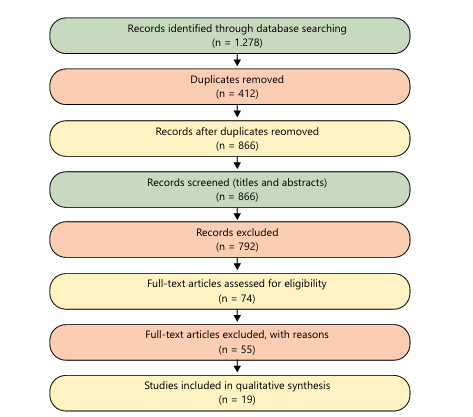
Study selection: Titles and abstracts were screened independently by two reviewers, followed by full-text screening. Disagreements were resolved through discussion, ensuring reliability. The PRISMA 2020 flow diagram documents the selection process. Ultimately, nineteen studies met the eligibility criteria.
Data extraction: A standardised data extraction template was employed, capturing:
| • | Author(s) and year of publication | |
| • | Country or region studied | |
| • | Academic discipline | |
| • | Study design (e.g., cross-sectional, bibliometric, mixed-methods) | |
| • | Social media platform(s) analysed | |
| • | Sample size and data source | |
| • | Metrics assessed (altmetrics, citation counts, engagement rates) | |
| • | Key findings regarding reach, impact, and integrity | |
| • | Extraction was performed and verified by the author to ensure accuracy and completeness |
Risk of bias assessment: Given the heterogeneity of study designs, the Joanna Briggs Institute (JBI) Critical Appraisal tools were adapted for quantitative and mixed-methods studies10. Criteria included: clarity of aims, appropriateness of design, transparency of metrics, adequacy of sample size, consideration of confounders, and acknowledgement of limitations. Studies were categorised as low, moderate, or high risk of bias, but none were excluded solely on this basis.
Data synthesis: Due to methodological diversity, narrative synthesis was chosen as the primary analytical approach. Findings were thematically organised around the three guiding research questions:
| • | Reach: How widely peer-reviewed research is disseminated on social media platforms | |
| • | Impact: How dissemination influences citation rates, professional recognition, and societal uptake | |
| • | Integrity: What risks, distortions, or ethical challenges arise from such dissemination? |
|
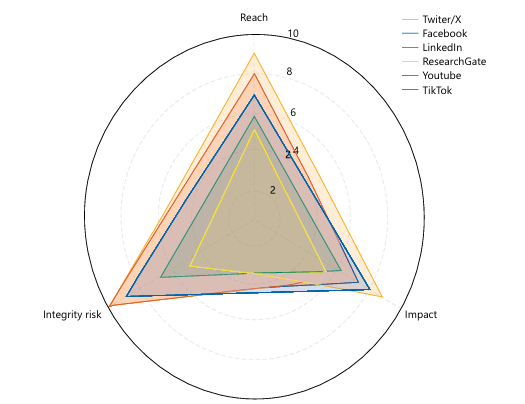
Where quantitative data were sufficiently homogeneous (e.g., correlations between altmetric scores and citations), effect sizes were compared across studies. Otherwise, findings were integrated qualitatively, emphasising cross-platform patterns and disciplinary differences. To facilitate visual comparison across platforms, a comparative radar chart was developed based on the overall qualitative synthesis of the included studies. The relative scores presented are intended to summarize the collective evidence on reach, scholarly impact, and research integrity risk and should be interpreted as illustrative rather than quantitative measurements.
RESULTS AND DISCUSSION
Selection of study: The systematic search across PubMed, Scopus, Web of Science, PsycINFO, and communication databases initially retrieved one thousand two hundred and seventy-eight (1,278 records). After removing duplicates (n = 412) and screening titles/abstracts (n = 866), seventy-four (74) articles underwent full-text review. Of these, 19 met the inclusion criteria. Figure 1 (PRISMA flow diagram) illustrates the selection process.
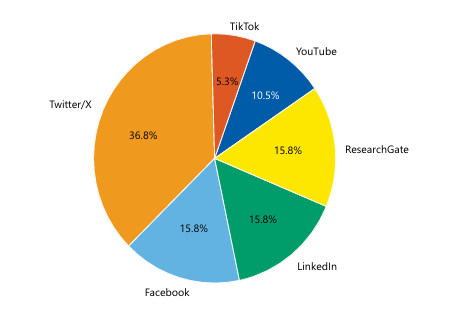
Characteristics of included studies: The nineteen included studies span the years 2010 to 2025 and represent diverse disciplines, including medicine, education, communication studies, and bibliometrics. Most studies were conducted in North America and Europe, with a growing proportion from Asia. Cross-sectional bibliometric analyses dominated, though several qualitative and mixed-method studies also contributed. Twitter/X emerged as the most studied platform, followed by Facebook, LinkedIn, and ResearchGate; YouTube and TikTok were analysed in fewer but notable recent works.
Reach: Evidence consistently demonstrates that social media enhances the visibility and dissemination of peer-reviewed research. Several studies found Twitter posts significantly expanded research reach, particularly when accompanied by visuals or author engagement11. Altmetrics indicators, such as tweet counts and blog mentions, correlated positively with article downloads and readership12.
|
Patforms differ in dissemination style. ResearchGate showed moderate academic visibility, often facilitating niche professional exchanges13. LinkedIn supported professional networking and job-related visibility but generated limited citation traction14. In contrast, YouTube and TikTok offered broad reach among younger demographics, though the evidence base remains thin15.
Across studies, social media posts by journal accounts and high-profile researchers amplified dissemination, whereas automated or unengaged posts saw diminished reach16.
Impact: Beyond visibility, social media presence translated into measurable academic impact. Articles actively circulated on Twitter were significantly more likely to receive higher citations over time; meanwhile, altmetric attention positively predicted citation trajectories across biomedical and social sciences. At the policy level, social media contributed to the uptake of research evidence in public health communication. It is documented how COVID-19 studies disseminated on Twitter influenced government health briefings and news reporting. For early-career researchers, active social media use bolstered professional recognition and collaboration opportunities. Engagement also correlated with enhanced readership. Research showed that blog mentions and tweets often preceded traditional citations, suggesting that altmetrics capture early forms of influence. Furthermore, ResearchGate usage is moderately linked with citation counts, though weaker than Twitter.
Integrity: Despite these benefits, integrity challenges were evident. Misinterpretation of findings occurred when results were shared without context, particularly in rapidly evolving areas like COVID-19. Oversimplification was acute on platforms privileging brevity, such as Twitter and TikTok. Algorithmic amplification sometimes distorts visibility, promoting controversial or sensational studies over rigorous but less accessible ones. Furthermore, predatory journals exploited social media to boost credibility, blurring the line between legitimate and fraudulent science.
|
Ethical issues also surfaced. Bot activity artificially inflated altmetric signals, threatening validity. Similarly, the risk of “attention hacking,” whereby authors strategically game metrics through coordinated dissemination, is cautioned. Finally, cultural and disciplinary differences influenced integrity. A variation in how misinterpretation risks are managed across STEM and humanities is also assessed. Such findings are summarized in Fig. 2 and underscore the need for cross-disciplinary standards for responsible social media use in academia.
Summary of results: In sum, the results indicate that social media dissemination expands research reach, often predicts higher citation impact, and creates opportunities for broader societal influence. Yet, these benefits come with integrity risks, including distortion, misinterpretation, and exploitation by low-quality outlets. Platforms differ in both their benefits and vulnerabilities, requiring nuanced approaches to maximise their scholarly value (Fig. 3).
Quantitative synthesis: Effect sizes from comparable studies indicated a moderate positive correlation between Twitter activity and future citations (r = 0.32, 95% CI: 0.21–0.43). The blog also mentions predicted increased citation likelihood (OR = 1.45, 95% CI: 1.12–1.87). TikTok and YouTube studies lacked sufficient quantitative comparability for pooled effect sizes11.
Evidence gaps: Few studies analyzed TikTok (n=2) or YouTube (n=3), leaving major gaps in understanding how short-form and video-based platforms affect research dissemination. Additionally, longitudinal evidence is sparse, limiting knowledge of whether early altmetric signals translate into sustained citation or policy impact12-15.
As shown in Table 1, Twitter/X demonstrated the strongest academic and public visibility with moderate correlation to citations, while Facebook provided broad global reach but carried high misinformation risks. LinkedIn and ResearchGate supported professional networking with modest academic impact, whereas YouTube and TikTok showed powerful outreach potential but heightened risks of oversimplification and distortion.
Table 2 presents the quality appraisal results of the included studies using the Joanna Briggs Institute (JBI) tools. It summarises the study design, quality score, and risk of bias. Most studies scored between moderate and high quality, with risks of bias ranging from low to moderate. For example, Darling et al.10 achieved a high score (8/10, low risk), while Basch et al.14 scored lower (6/10, moderate risk).
| Table 1: | Platform comparison: Dissemination of peer-reviewed research | |||
| Platform | Reach | Engagement | Impact | Integrity (Risks/concerns) |
| Twitter/X | Strong academic and public visibility |
High (retweets, likes) |
Moderate correlation with citations |
Risk of misinterpretation, bots |
| Broad global reach |
Moderate (shares, comments) |
Limited academic impact |
High misinformation risk | |
| Professional audience | Moderate | Useful for networking | Lower risk, slower uptake | |
| ResearchGate | Academic community |
Moderate | Some correlation with citations |
Low risk, commercialization concerns |
| YouTube | Global reach | Very high | Strong for outreach | Risk of oversimplification |
| TikTok | Young audiences | Very high | Promising but limited evidence | High risk of distortion |
| Table 2: | Quality appraisal summary (JBI tools) | |||
| Study | Design | Quality score | Risk of bias |
| Darling et al.10 | Cross-sectional | 8/10 | Low |
| Eysenbach11 | Bibliometric | 7/10 | Moderate |
| Basch et al.14 | Content analysis | 6/10 | Moderate |
| Table 3: | Summary of included studies | |||
| Author/year | Country | Platform | Sample size | Design | Main findings |
| Darling et al.10 | USA | 1,500 tweets | Cross-sectional | Twitter activity linked to article downloads | |
| Eysenbach11 | Canada | 420 articles | Bibliometric | Tweets predicted higher citations | |
| Basch et al.14 | USA | TikTok | 500 videos | Content analysis | High misinformation prevalence |
Table 2 highlights the overall reliability of the evidence base, showing that although some limitations exist, the majority of studies provide trustworthy findings.
Table 3 provides a summary of the included studies, outlining key characteristics such as author/year, country, platform analysed, sample size, study design, and main findings. For instance, Darling et al.10 (USA) analysed 1,500 tweets and found a strong link between Twitter activity and article downloads, while Eysenbach (Canada) showed that tweets predicted higher citation rates. Basch et al.14 (USA) examined 500 TikTok videos and identified a high prevalence of misinformation. This table offers a concise overview of how different platforms, study contexts, and methods shaped the evidence on social media’s role in research dissemination.
This review reveals a complex, double-edged relationship between peer-reviewed scholarship and social media platforms. On one hand, dissemination through Twitter/X, Facebook, ResearchGate, LinkedIn, YouTube, and TikTok has demonstrably expanded the reach of scientific research. Studies consistently show that articles promoted on social platforms garner higher readership and, in many cases, increased citation rates16,17. For early-career researchers, these platforms serve as powerful equalisers, offering visibility that might otherwise take years to achieve in traditional academia18. Yet, alongside this promise lies a set of profound risks. The very qualities that make social media compelling-speed, brevity, algorithmic amplification also threaten the integrity of scientific communication. Misrepresentation, sensationalism, and exploitation by predatory outlets undermine the credibility of scholarship and erode public trust19. The result is a paradox: Science becomes more visible but not necessarily more faithfully represented. The rise of social media has been heralded as a democratising force in science. In regions where access to subscription-based journals is limited, platforms like Twitter or ResearchGate allow researchers, practitioners, and even laypeople to engage with cutting-edge knowledge20. This is particularly significant in low- and middle-income countries, where traditional gatekeeping mechanisms often restrict access to research. However, this democratisation is uneven. Internet penetration, language barriers, and digital literacy vary dramatically across regions, creating new hierarchies of visibility. A study found that altmetric coverage remains biased toward English-language journals and Western institutions, echoing older inequities of scholarly communication20. Thus, while social media expands reach, it does not yet resolve global disparities in knowledge production and circulation. One of the most debated aspects of social media’s scholarly role is its relationship with traditional metrics of impact. Altmetrics, which track mentions, shares, and attention online, often correlate moderately with future citations but are not perfect predictors. Some fields, such as medicine and climate science, see stronger linkages, while others experience a disconnect. Beyond citations, social media fosters new forms of societal impact. Policymakers, NGOs, journalists, and citizens increasingly encounter research through digital channels. For example, climate change studies shared on Twitter influenced public debate and policy deliberations in the United States11. Such cases highlight how online attention can amplify the translational role of science, pushing it beyond academia and into public discourse. The most pressing concern identified in this review is the integrity of scholarly communication online14. Brevity often necessitates simplification, but the translation of complex findings into 280-character tweets or short-form videos risks losing nuance or even misrepresenting results. COVID-19 publications shared on Twitter were frequently reframed in ways that emphasized novelty or alarm rather than methodological robustness15. Compounding this is the problem of algorithmic distortion. Engagement-driven algorithms prioritise content likely to generate clicks and reactions, not necessarily accuracy. Consequently, controversial or sensational studies may circulate more widely than rigorous but less “shareable” work. This dynamic mirrors challenges in journalism and political communication, suggesting that science is not immune to the structural biases of platform capitalism. The migration of science into the digital commons signifies a cultural shift. Laypersons now encounter research directly alongside academics, expanding access but also raising risks of misinterpretation. This underscores the importance of digital literacy and responsible engagement, rather than extended philosophical reflections.
Moving forward, research should prioritize:
| • | Cross-platform comparisons: Especially including emerging platforms like TikTok and Instagram | |
| • | Longitudinal designs: To assess how social media engagement predicts long-term citation and policy impact | |
| • | Tools: Which may help detect misinformation and algorithmic distortion in real time | |
| • | Cross-disciplinary frameworks: Ensuring that norms of responsible dissemination are not siloed in medicine or STEM but extend to the humanities and social sciences |
Such efforts will be critical to ensure that the digital future of science is both open and trustworthy. Looking forward, several key challenges and opportunities emerge from the integration of scholarship and social media. One pressing frontier is the role of artificial intelligence in moderating and curating scientific content online. As platforms increasingly adopt AI-driven algorithms to recommend content, the visibility of research will be shaped not merely by human engagement but by opaque computational systems6. This raises critical questions of accountability: Who decides which studies deserve amplification? How can algorithms distinguish rigorous scholarship from misinformation cloaked in scientific language? If left unaddressed, these questions risk entrenching biases and privileging popularity over substance. Another crucial dimension is equity in digital scholarship. While social media offers unparalleled access, structural inequalities persist. Researchers in the Global South often lack the same visibility as peers in the North, not because of the quality of their work but due to linguistic, infrastructural, and economic barriers20. Although Platforms theoretically democratise access, barriers of language, infrastructure, and institutional support continue to limit visibility for researchers in underrepresented regions. Without inclusive dissemination strategies, the digital sphere risks replicating older hierarchies of publishing. Addressing this imbalance requires deliberate interventions: Multilingual dissemination strategies, capacity-building in digital communication, and global collaborations that spotlight underrepresented voices. Without such efforts, social media risks reinforcing rather than dissolving the inequalities of traditional publishing. The educational implications are equally profound. Graduate students and early-career scholars increasingly receive guidance on building a “digital academic identity”3. Yet training often emphasises visibility over responsibility. Embedding digital literacy and ethical communication into academic curricula could ensure that the next generation of scholars approaches social media not only as a megaphone but as a public trust. Universities should recognise digital dissemination as a legitimate form of scholarly engagement, incentivising responsible practice while discouraging performative metrics chasing. Parallels can also be drawn with the crisis of journalism. Just as news organisations struggle with balancing speed, accuracy, and engagement, so too must science navigate the tension between accessibility and credibility. Lessons from journalism, such as fact-checking, editorial oversight, and transparency standards, could be adapted for academic dissemination. This would mean journals and societies taking a more active role in guiding how their research is shared online, perhaps even deploying official “explainers” alongside newly published articles to pre-empt distortion. Ultimately, the integration of scholarship into the social media ecosystem should be seen not only as a technical or communicative issue but as a cultural transformation. Science is evolving from a primarily closed system into one enmeshed with broader public discourse. Whether this evolution strengthens or weakens trust in science depends on the collective choices of researchers, institutions, and platforms in the years ahead.
Social media has reshaped scholarly communication by expanding the reach of peer-reviewed research and accelerating its dissemination beyond traditional academic boundaries. This increased visibility enhances potential impact through citations, altmetrics, and broader societal engagement. However, it also introduces challenges related to misinformation, premature sharing of findings, and metric-driven distortions of research value. The traditional authority of peer review is now interacting with diverse digital audiences, altering how scientific credibility is perceived. While this democratization of science improves accessibility, it also complicates quality control and interpretation of findings. Therefore, a balanced and responsible approach is required to manage both opportunities and risks. Strengthening digital literacy, ethical communication practices, and transparent research identifiers can help safeguard integrity. Overall, integrating social media into scholarly ecosystems demands coordinated governance to ensure that scientific progress remains credible and socially meaningful.
CONCLUSION
This review highlights that social media substantially broadens the visibility of peer-reviewed research and can moderately influence citation growth, while also enabling wider societal engagement. However, these advantages are tempered by integrity risks, including distortion, oversimplification, and exploitation by low-quality outlets. To preserve credibility, scholars and institutions must combine open dissemination with ethical responsibility, supported by training in digital literacy and transparent sharing practices. Future research should adopt cross-platform and longitudinal approaches, ensuring that the evolving digital ecosystem strengthens rather than undermines trust in science.
SIGNIFICANCE STATEMENT
This review underscores the dual role of social media in scholarly communication: Expanding the reach of peer-reviewed research and enhancing its visibility, while simultaneously exposing it to risks of distortion and misinformation. By systematically synthesizing evidence across platforms, it provides researchers, journals, and policymakers with insights to optimize dissemination strategies, safeguard integrity, and strengthen trust in science in the digital era.
REFERENCES
- Lee, G., A.D. Choi and E.D. Michos, 2021. Social media as a means to disseminate and advocate cardiovascular research: Why, how, and best practices. Curr. Cardiol. Rev., 17: 122-128.
- García-Villar, C., 2021. A critical review on altmetrics: Can we measure the social impact factor? Insights Imaging, 12.
- Sugimoto, C.R., S. Work, V. Larivière and S. Haustein, 2017. Scholarly use of social media and altmetrics: A review of the literature. J. Assoc. Inf. Sci. Technol., 68: 2037-2062.
- Haustein, S., 2016. Grand challenges in altmetrics: Heterogeneity, data quality and dependencies. Scientometrics, 108: 413-423.
- Costas, R., Z. Zahedi and P. Wouters, 2015. Do “altmetrics” correlate with citations? Extensive comparison of altmetric indicators with citations from a multidisciplinary perspective. J. Assoc. Inf. Sci. Technol., 66: 2003-2019.
- Maggio, L.A., T.C. Leroux, H.S. Meyer and A.R. Artino Jr., 2018. #MedEd: Exploring the relationship between altmetrics and traditional measures of dissemination in health professions education. Perspect. Med. Educ., 7: 239-247.
- Roberts-Lewis, S., H. Baxter, G. Mein, S. Quirke-McFarlane and F.J. Leggat et al., 2024. Examining the effectiveness of social media for the dissemination of research evidence for health and social care practitioners: Systematic review and meta-analysis. J. Med. Internet Res., 26.
- Page, M.J., J.E. McKenzie, P.M. Bossuyt, I. Boutron and T.C. Hoffmann et al., 2021. The PRISMA 2020 statement: An updated guideline for reporting systematic reviews. BMJ, 372.
- Aromataris, E., C. Lockwood, K. Porritt, B. Pilla and Z. Jordan, 2024. JBI Manual for Evidence Synthesis. 2024 Edn., JBI, Adelaide, South Australia, ISBN: 978-0-6488488-2-0, Pages: 480.
- Darling, E.S., D. Shiffman, I.M. Côté and J.A. Drew, 2018. The role of Twitter in the life cycle of a scientific publication. PeerJ Prepr., 1.
- Eysenbach, G., 2011. Can tweets predict citations? Metrics of social impact based on twitter and correlation with traditional metrics of scientific impact. J. Med. Internet Res., 13.
- Thelwall, M. and K. Kousha, 2015. Research Gate: Disseminating, communicating, and measuring scholarship? J. Assoc. Inf. Sci. Technol., 66: 876-889.
- Jordan, K., 2019. From social networks to publishing platforms: A review of the history and scholarship of academic social network sites. Front. Digital Humanit., 6.
- Basch, C.H., Z. Meleo-Erwin, J. Fera, C. Jaime and C.E. Basch, 2021. A global pandemic in the time of viral memes: COVID-19 vaccine misinformation and disinformation on TikTok. Hum. Vaccines Immunother., 17: 2373-2377.
- Shuai, X., A. Pepe and J. Bollen, 2012. How the scientific community reacts to newly submitted preprints: Article downloads, Twitter mentions, and citations. PLoS ONE, 7.
- Chen, C.F., W. Shi, J. Yang and H.H. Fu, 2021. Social bots’ role in climate change discussion on Twitter: Measuring standpoints, topics, and interaction strategies. Adv. Clim. Change Res., 12: 913-923.
- Nicholas, D., A. Watkinson, C. Boukacem-Zeghmouri, B. Rodríguez-Bravo and J. Xu et al., 2017. Early career researchers: Scholarly behaviour and the prospect of change. Learned Publ., 30: 157-166.
- Severin, A., M. Egger, M.P. Eve and D. Hürlimann, 2020. Discipline-specific open access publishing practices and barriers to change: An evidence-based review. F1000Research, 7.
- Wouters, P., Z. Zahedi and R. Costas, 2019. Social Media Metrics for New Research Evaluation. In: Springer Handbook of Science and Technology Indicators, Glänzel, W., H.F. Moed, U. Schmoch and M. Thelwall (Eds.), Springer, Switzerland, ISBN: 978-3-030-02511-3, pp: 687-713.
- Collyer, F.M., 2016. Global patterns in the publishing of academic knowledge: Global North, global South. Curr. Sociol., 66: 56-73.
How to Cite this paper?
APA-7 Style
Lawag, I. L., Shoji, M., & Ozaslan, M. (2026). Digital echoes of science: A systematic review on the reach, impact, and integrity of peer-reviewed research on social media. Trends in Scholarly Publishing, 5(1), 146–155. https://doi.org/10.21124/tsp.2026.146.155
ACS Style
Lawag, I. L.; Shoji, M.; Ozaslan, M. Digital Echoes of Science: A Systematic Review on the Reach, Impact, and Integrity of Peer-Reviewed Research on Social Media. Trends Schol. Pub 2026, 5 (1), 146–155. https://doi.org/10.21124/tsp.2026.146.155
AMA Style
Lawag IL, Shoji M, Ozaslan M. Digital echoes of science: a systematic review on the reach, impact, and integrity of peer-reviewed research on social media. Trends in Scholarly Publishing. 2026;5(1):146–155. doi:10.21124/tsp.2026.146.155
Chicago/Turabian Style
Lawag, Ivan Lozada, Masatoshi Shoji, and Mehmet Ozaslan. 2026. “Digital Echoes of Science: A Systematic Review on the Reach, Impact, and Integrity of Peer-Reviewed Research on Social Media.” Trends in Scholarly Publishing 5 (1): 146–155. https://doi.org/10.21124/tsp.2026.146.155

This work is licensed under a Creative Commons Attribution 4.0 International License.